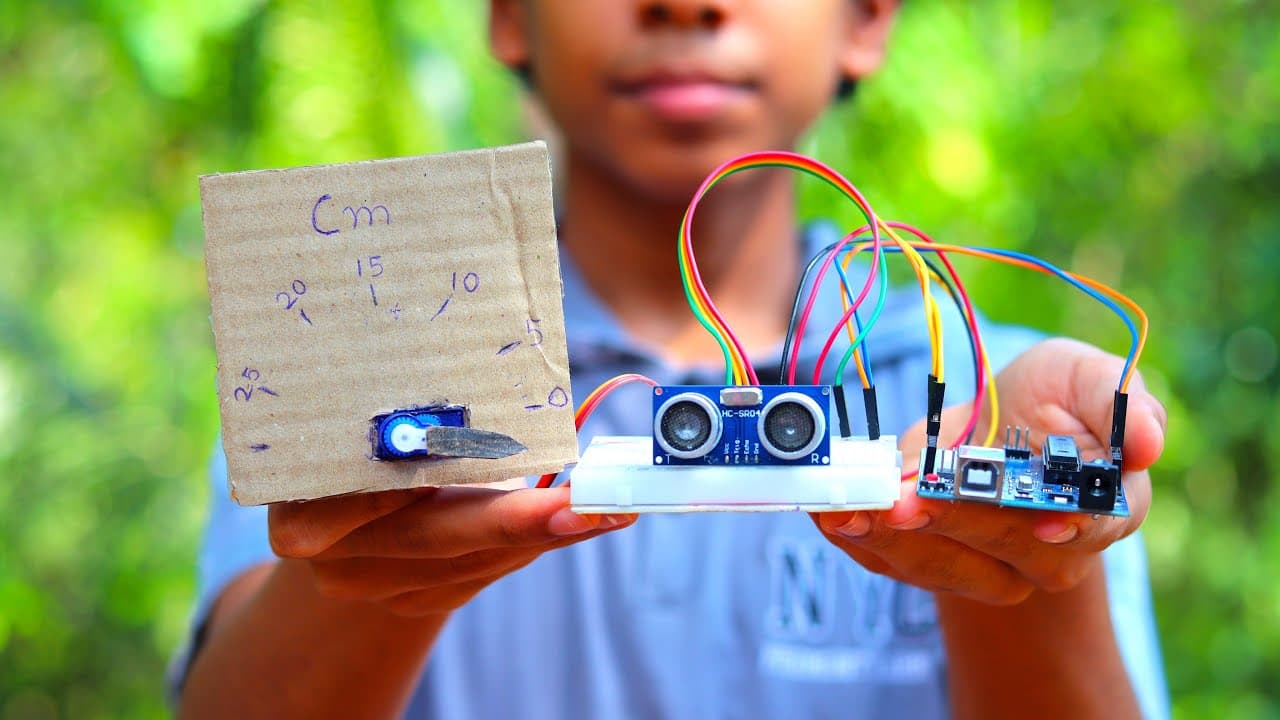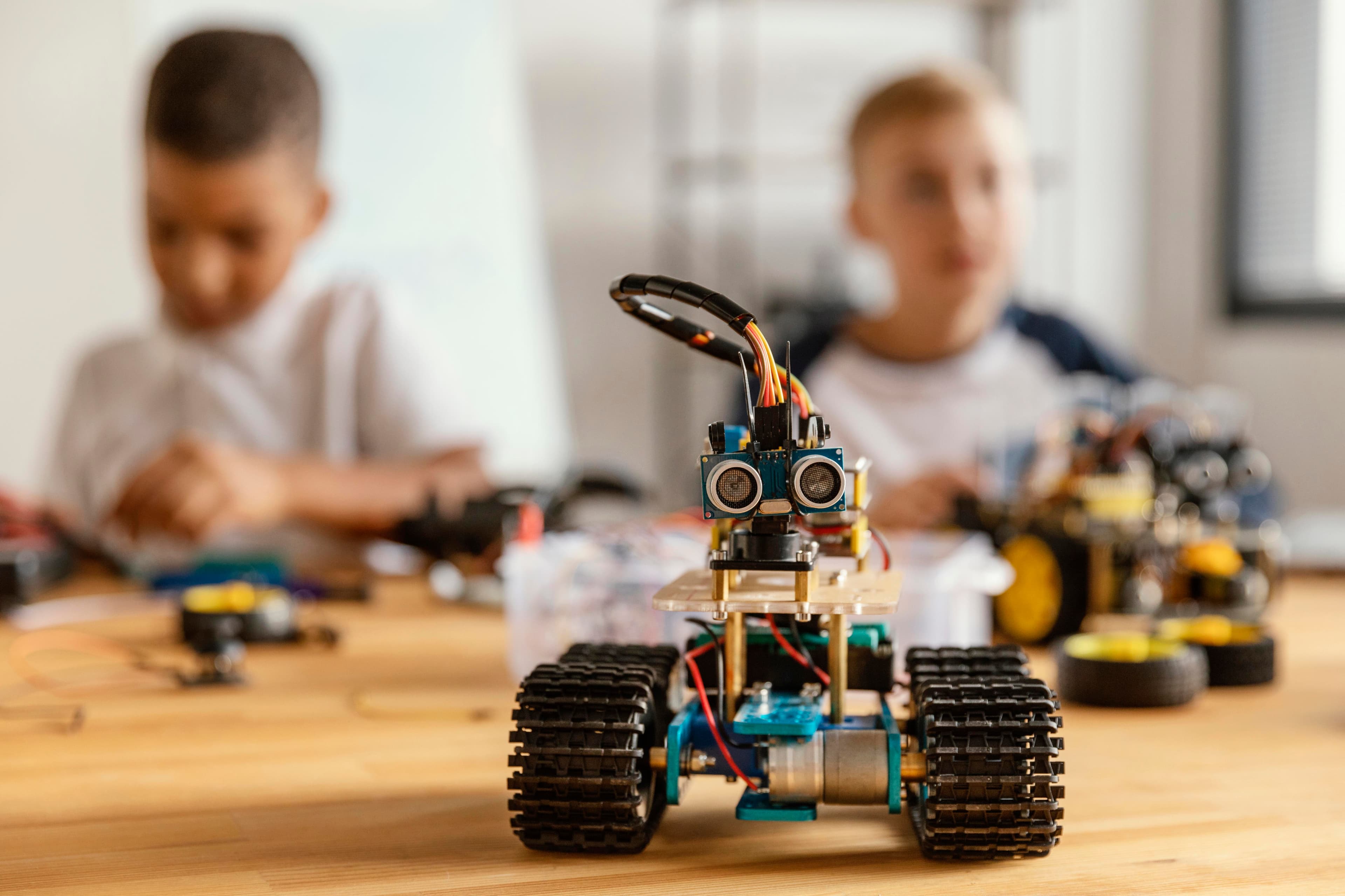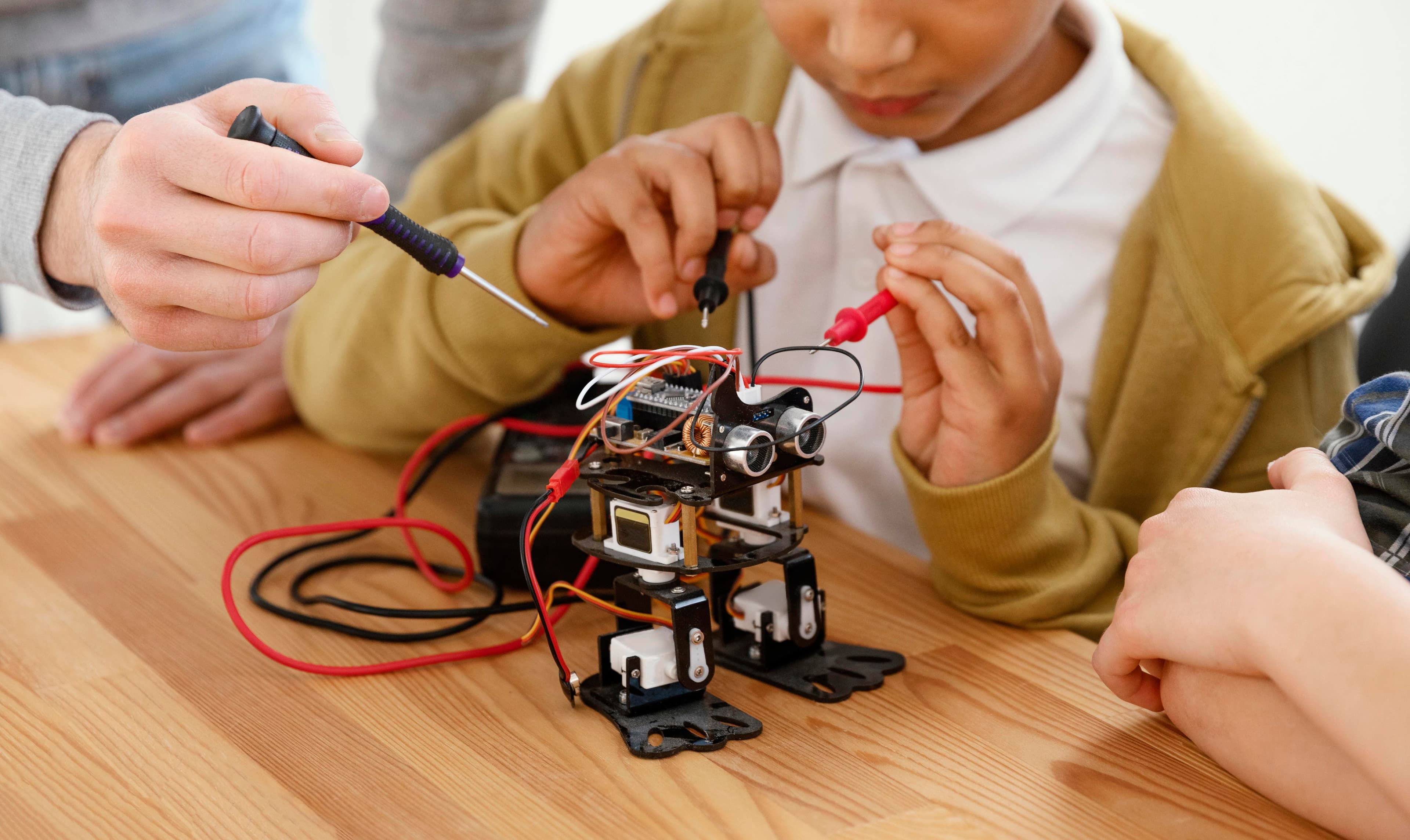

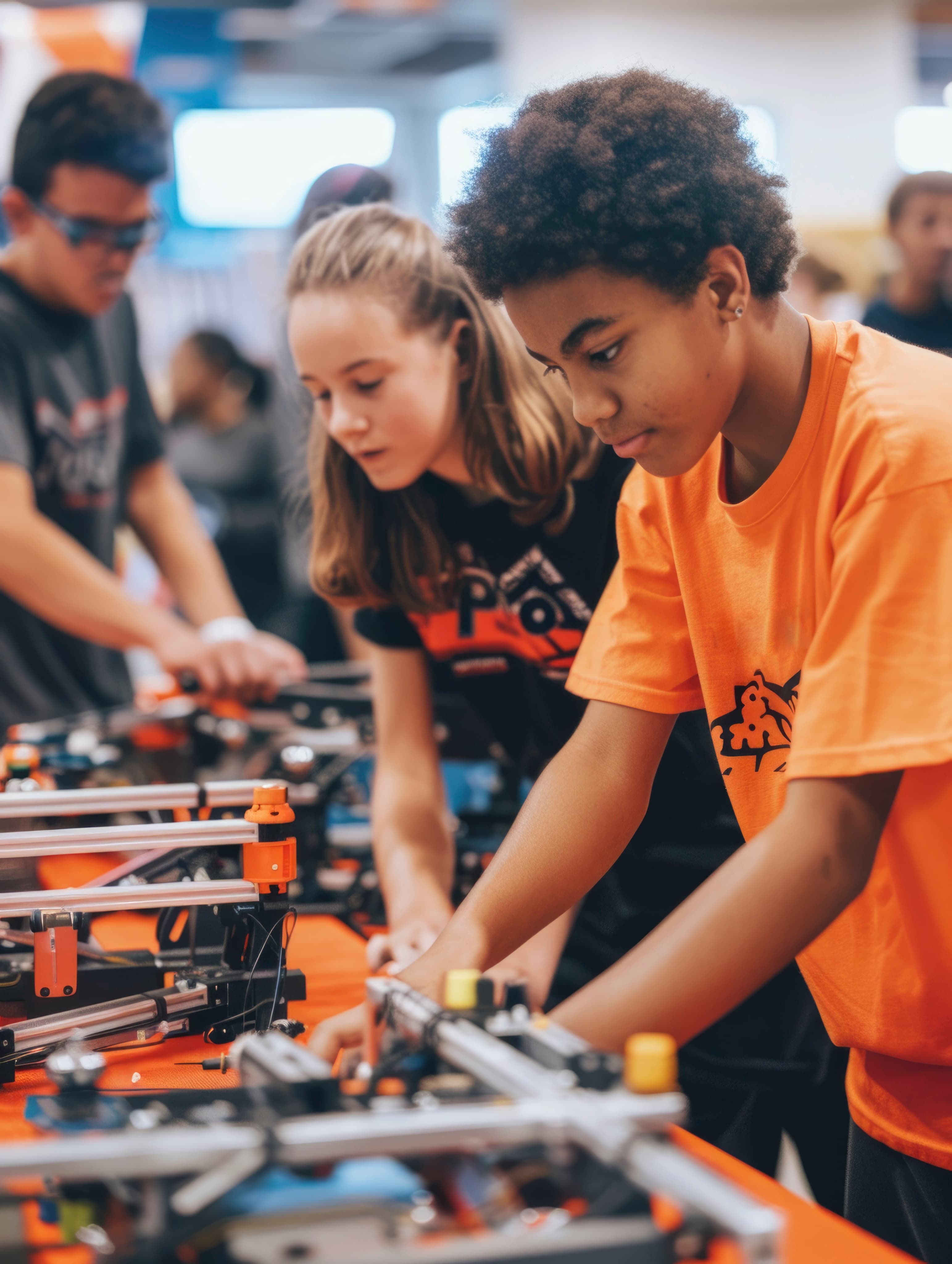
There is nothing quite like the energy of a robotics competition: teams huddled over laptops making last-minute code changes, robots racing across a field, and students explaining their designs to judges. STEM competitions motivate students to go further than any classroom exercise, and they build exactly the skills employers and universities look for.
Ghana already has a strong competition culture. The National Science and Maths Quiz is followed by millions. Hands-on STEM and robotics competitions are growing alongside it. This guide explains the main types, how to build a team, and how to prepare.
Types of STEM and robotics competitions
- Robot challenge competitions: teams build and program robots to complete set missions, such as following a line, navigating a maze, sorting objects or scoring goals.
- Innovation and project competitions: students design a technology solution to a real problem (often linked to agriculture, health, energy, or the environment) and present it to judges.
- Science fairs and exhibitions: school, district and regional exhibitions where students display and explain their projects.
- Hackathons and coding challenges: short, intense events where teams build software or hardware prototypes against the clock.
- International programmes: global competitions such as the World Robot Olympiad and FIRST LEGO League run national or regional qualifiers in many countries. Check each organiser's website for current participation details in Ghana.
- Knowledge quizzes: competitions like the NSMQ test theory, which pairs well with hands-on competitions that test practical skills.
Why schools should enter competitions
- Deeper learning: students learn more preparing for one competition than in a term of worksheets.
- Real engineering habits: planning, prototyping, testing, failing and improving under a deadline.
- Presentation skills: explaining a design to judges builds confidence and communication skills.
- School reputation: competition results are powerful evidence of a strong STEM program for parents and prospective families.
- Opportunities: standout students gain visibility for scholarships, internships and further study.
How to build a school robotics team
- Find a coach. A teacher who is enthusiastic and willing to learn alongside students. Technical expertise can be built through training workshops.
- Recruit a balanced team. Three to five students with a mix of builders, coders, designers and presenters. Enthusiasm matters more than prior experience.
- Get the right kit. Choose a robotics platform allowed by the competition rules. Soccer-style robot kits such as the Cutebot football kit are great for practice, and versatile robot cars cover most line-following and obstacle challenges.
- Schedule regular practice. Two sessions a week, increasing as the competition approaches.
- Keep an engineering notebook. Many competitions reward documentation of the design process.
A 10-week preparation timeline
| Weeks | Focus | Goal |
|---|---|---|
| 1 to 2 | Rules and fundamentals | Every team member understands the rules, scoring and the robot platform |
| 3 to 4 | Design and first build | A working first robot that can attempt every mission, even badly |
| 5 to 7 | Iterate and optimise | Improve reliability, speed and accuracy. Test each mission many times |
| 8 | Mock competition | Full timed run under competition conditions, including judging and presentation |
| 9 | Refine and document | Fix weaknesses, finalise the engineering notebook and presentation |
| 10 | Final checks | Spare parts, charged batteries, backup code and a packing checklist |
Tips that win competitions
- Reliability beats complexity. A simple robot that scores every time beats a clever one that fails half its runs.
- Test in real conditions. Lighting, floor surfaces and battery levels affect sensors, so practise on a surface like the competition field.
- Save working code. Keep a copy of every version that works before changing anything.
- Prepare for things to break. Bring spare parts, tools, extra batteries and a backup laptop if possible.
- Tell a story to judges. Explain the problem, your design choices, what failed and what you learned.
- Every member speaks. Judges notice teams where everyone understands the robot.
Looking for a project for an innovation category? Browse our STEM, robotics and AI project ideas for students.
Frequently asked questions
Are there robotics competitions for students in Ghana?
Yes. Students in Ghana can take part in school and regional STEM exhibitions, innovation challenges, hackathons and robotics competitions, as well as the national rounds of international programmes where these are organised. Check organisers' websites for current dates and eligibility.
What age can students start competing in robotics?
Many robotics competitions have categories for students from upper primary (around age 8 to 10) through senior high school, with different challenges for each age group.
What robot kit should a school team use?
Use a platform allowed by the competition rules. For practice and many school-level challenges, micro:bit-based robot cars and soccer robot kits are affordable and easy to program. Older students may use Arduino or Raspberry Pi Pico.
How long does it take to prepare for a robotics competition?
Plan for about 8 to 12 weeks of regular practice for a first competition. That leaves time to learn the platform, build, test, run a mock competition and refine.