
The best way to learn STEM is to build something that works. That is the idea behind project based STEM learning in Ghana and around the world. Projects turn formulas and code into results students can see, test and show off. That makes them perfect for science fairs, STEM clubs, competitions and holiday learning.
Below are 25 STEM projects for students in Ghana, grouped by level, including electronics projects for students, robotics projects for students and AI projects for students in Ghana. Many are inspired by everyday life in Ghana, because the most impressive projects solve problems students actually see around them.
Beginner electronics projects (ages 8+)
- Steady-hand game: guide a metal loop along a wire without touching it, or a buzzer sounds. Teaches complete circuits and conductors.
- Banana piano: turn fruit or foil into piano keys using a touch-input board like the Bitboard kit. Teaches conductivity and inputs.
- Night light that switches itself on: a light sensor turns on an LED when it gets dark. Teaches sensors and conditions (if/else).
- Digital dice and step counter: program a micro:bit to show random numbers when shaken and count steps. Teaches variables and the accelerometer.
- Wearable coding watch: build and program a simple smartwatch with the coding watch kit. Teaches displays, timers and buttons.
Smart home and community projects (ages 11+)
- Power-outage alert: detect when mains power goes off and sound an alarm or log the time. Useful for shops storing cold goods during outages.
- Smart door and intruder alarm: a motion (PIR) sensor triggers a buzzer and a light. Teaches security systems logic.
- Automatic street light: street lights that switch on at dusk and off at dawn to save energy.
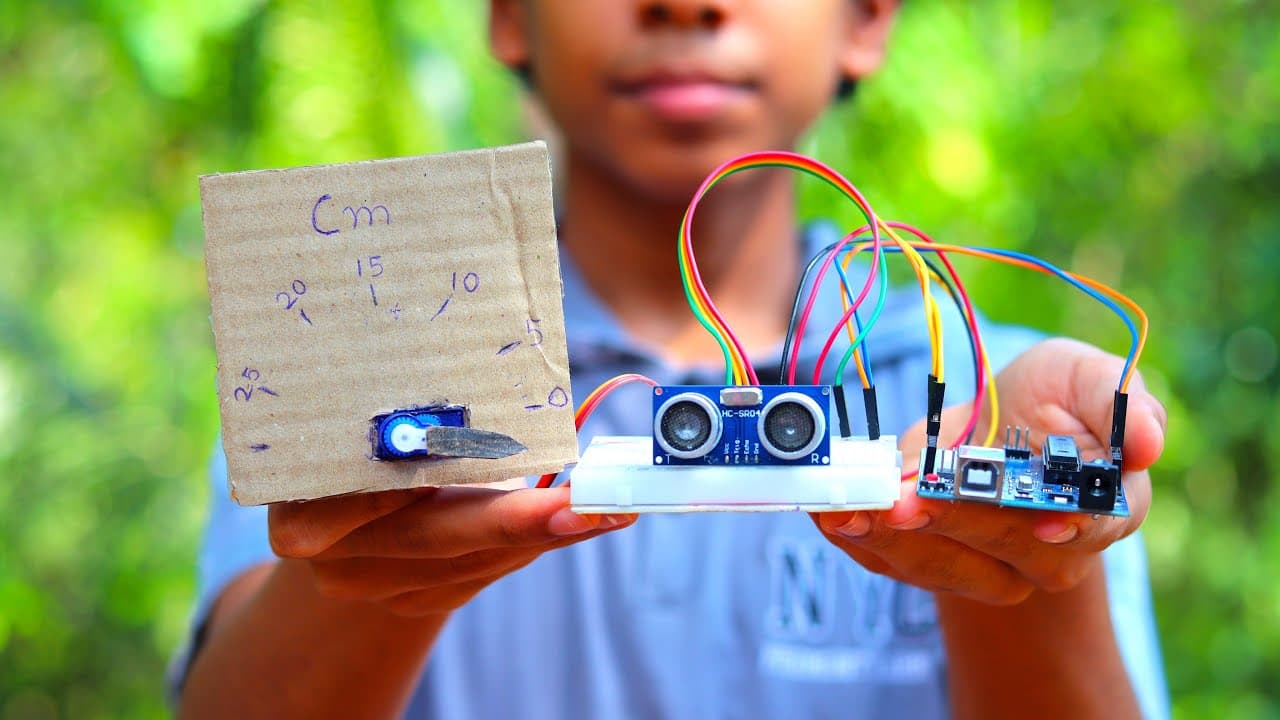
- Smart water tank level indicator: an ultrasonic sensor measures the water level in a tank and lights LEDs (or alerts) when it is low. A real household problem.
- Smart home model: combine lights, fan, door and sensors in a model house with the classroom smart home kit.
Agriculture and environment projects (ages 12+)
- Automatic irrigation system: a soil moisture sensor turns on a pump only when plants need water. Strong entry for innovation competitions. Try the smart agriculture kit.
- Mini weather station: measure temperature, humidity and light, and log the data over a week. See the smart climate kit.
- Air-quality monitor: measure dust (PM2.5) near a busy road compared with a classroom, and present the results. See the air purifier kit.
- Smart greenhouse: control light and watering to grow seedlings in a model greenhouse with the smart greenhouse kit.
- Smart waste bin: a lid that opens automatically when a hand comes close, plus a fill-level sensor that signals when the bin is full.
Robotics projects for students (ages 10+)
- Line-following robot: a robot car that follows a black line using infrared sensors. The classic first robot. Try the TPBot Edu car.
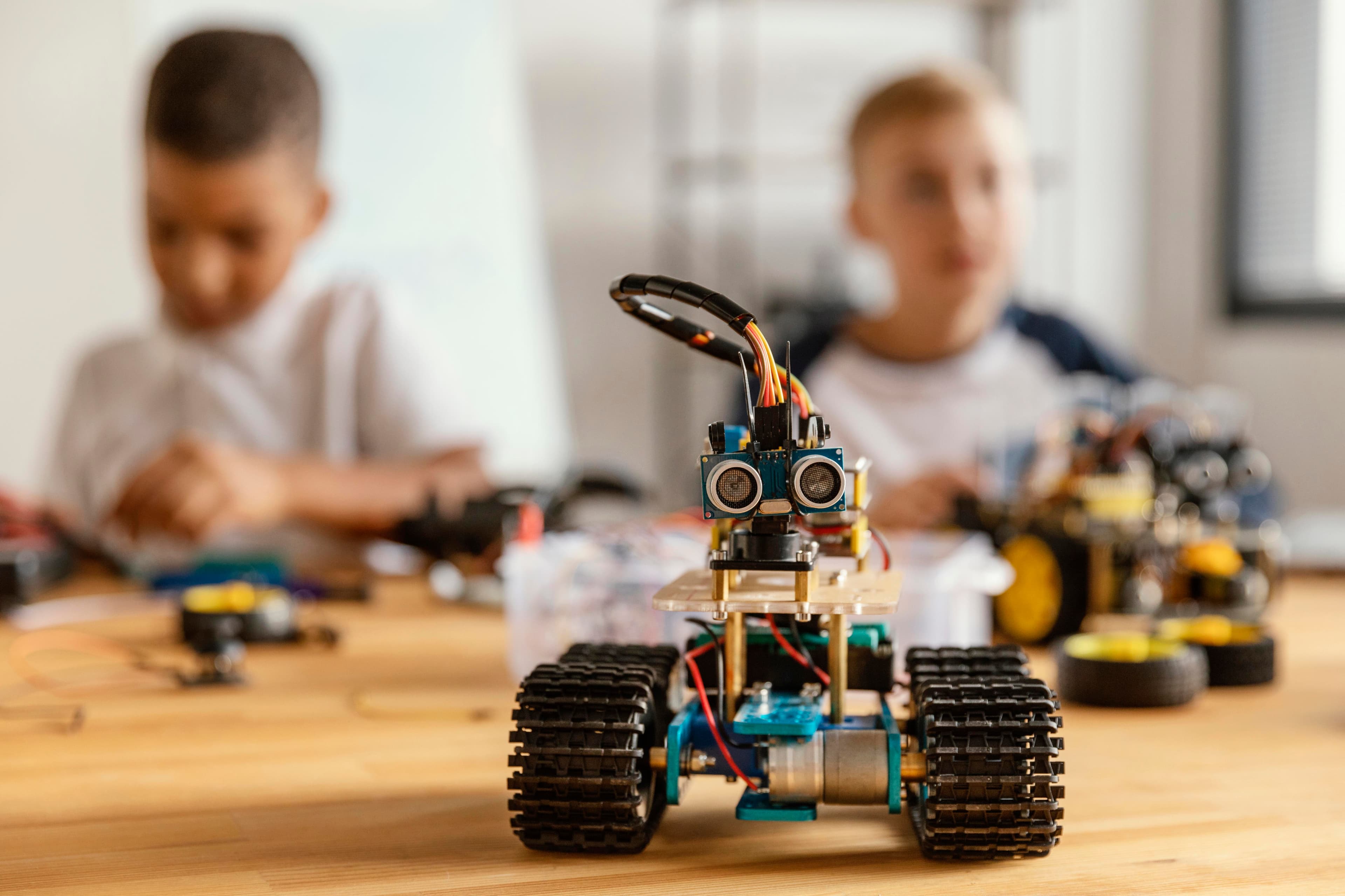
- Obstacle-avoiding robot: an ultrasonic sensor helps the robot detect walls and choose a new direction.
- Remote-controlled robot: drive a robot wirelessly using a second micro:bit or a joystick controller.
- Robot soccer: two teams of robots compete to score goals with the Cutebot football kit. Great for clubs.
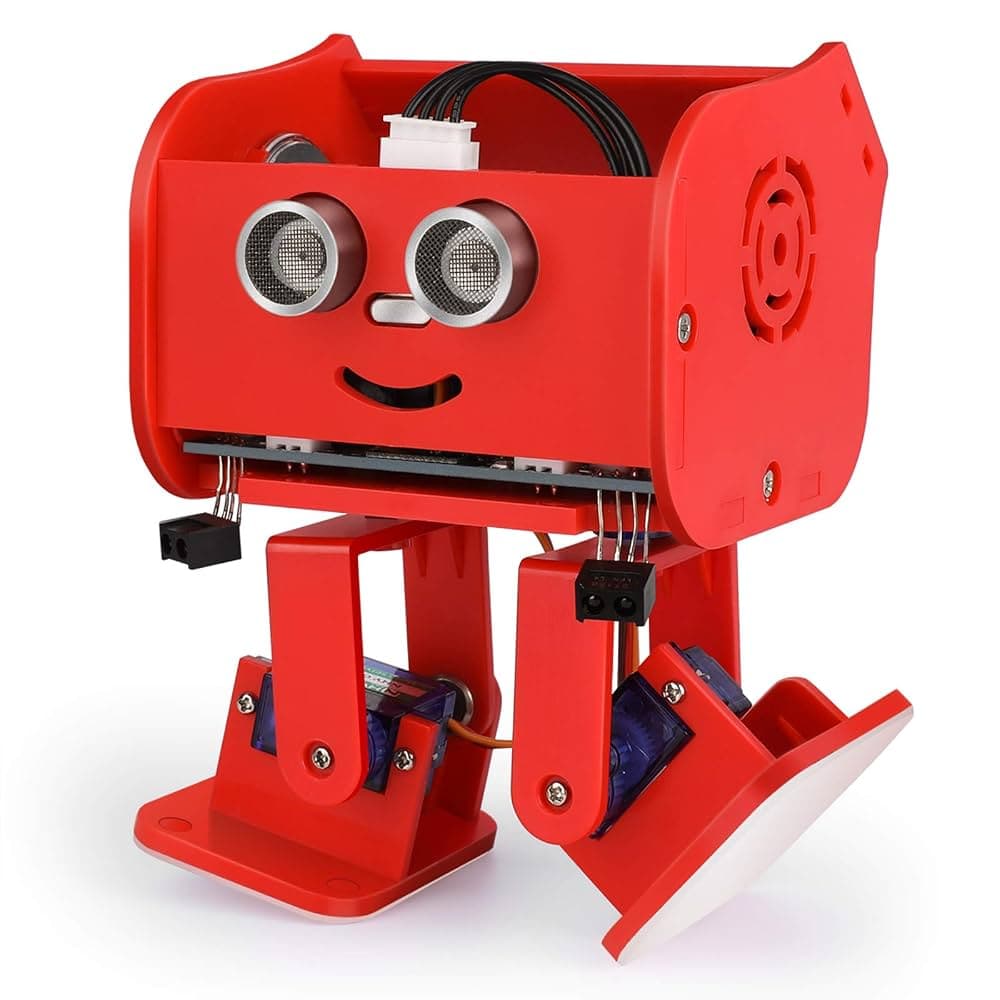
- Dancing or walking robot: program servos to make a humanoid robot like the PU robot kit walk and dance in sequence.
AI and advanced projects (ages 14+)
- Face-recognition door lock (model): an AI camera module recognises an authorised face and opens a servo-controlled door.
- Colour-sorting machine: an AI camera or colour sensor identifies objects and a servo sorts them, much like quality control in a factory.
- Traffic sign recognition robot: a robot car that stops, turns or slows when it sees printed traffic signs.
- Arduino plant-health monitor: use an Arduino board to log soil, light and temperature data and flag when conditions are poor.
- Retro game console: design and code your own games on a handheld console like the MakeCode Arcade kit. Teaches game logic, sprites and physics.
What makes a great student project
- A clear problem: state who the project helps and why it matters.
- A working demo: even a small, reliable demo beats a big, broken one.
- Evidence: measurements, test results, before-and-after comparisons.
- Iteration: show version 1, what went wrong and how version 2 improved.
- A good explanation: be ready to explain the circuit, the code and the science.
Frequently asked questions
What is a good STEM project for a beginner?
Good beginner projects include an automatic night light, a steady-hand game, a digital dice or a fruit piano. They need only a few components and teach the basics of circuits, inputs and simple coding.
What is a good robotics project for a science fair?
A line-following or obstacle-avoiding robot is a reliable first robotics project. For innovation-focused fairs, link the robot to a real problem, such as a smart irrigation system or a colour-sorting machine for quality control.
Can secondary school students in Ghana do AI projects?
Yes. With beginner-friendly AI camera modules and block or Python coding, secondary students can build face recognition, colour sorting and object detection projects without advanced mathematics.
Do I need Arduino for electronics projects?
Not at first. Beginners can start with the micro:bit and block coding. Arduino and Raspberry Pi Pico are great next steps for students ready for text-based programming and more complex circuits.