
Children in Ghana already use artificial intelligence every day, often without knowing it: voice assistants, video recommendations, photo filters and chatbots. Teaching AI is not about turning every child into a programmer. It is about helping them understand how these tools work, use them wisely and, one day, build them to solve local problems.
The best way to teach AI is the same as the best way to teach any STEM subject: hands-on, with real projects. This guide shows how, from primary school to senior high.
Explaining AI in simple words
A useful definition for children is: AI is when a computer learns patterns from examples so it can make guesses about new things. Show a computer thousands of pictures of mangoes and oranges, and it learns to tell them apart. That learning from examples is called machine learning.
- Data: the examples the computer learns from (pictures, sounds, numbers, text).
- Training: the process of the computer finding patterns in the data.
- Model: what the computer has learned, which it uses to make predictions.
- Prediction: the computer's guess about something new, which can be right or wrong.
Why AI belongs in Ghanaian classrooms
- Understanding: pupils learn that AI is built by people, learns from data and can make mistakes.
- Critical thinking: they learn to question AI answers instead of trusting them blindly.
- Local solutions: AI can help detect crop disease, translate local languages, monitor health and improve traffic. Ghana needs young people who can build these tools.
- Future careers: AI skills are increasingly valuable across almost every industry.
Age-appropriate AI activities
| Level | Learning goals | Activities |
|---|---|---|
| Primary 2 to 4 | Computers learn from examples; sorting and patterns | Unplugged sorting games, "teach the robot" role play |
| Primary 5 to 6 | Training data, predictions, mistakes | Train an image model in the browser, colour and face recognition with a camera kit |
| JHS 1 to 3 | Machine learning, bias, AI in robots | AI camera robots, gesture and voice control, smart farm projects |
| SHS and above | Python, data, building models | Python with simple ML libraries, AI robots on Raspberry Pi |
Hands-on AI projects for students
- Rock, paper, scissors classifier: train an image model in the browser with a free tool such as Google's Teachable Machine, then test it with your hand.
- Face-recognition door alarm: use the Smart AI Lens kit with a micro:bit to recognise faces and sound an alarm for strangers.
- Colour-sorting robot: program a robot to recognise colours and sort objects into groups.
- Traffic sign robot: teach a robot car to recognise cards for stop, left and right, then drive by itself.
- Smart farm assistant: combine soil-moisture sensors from the Smart Agriculture kit with a simple decision rule, then discuss how AI could predict watering needs.
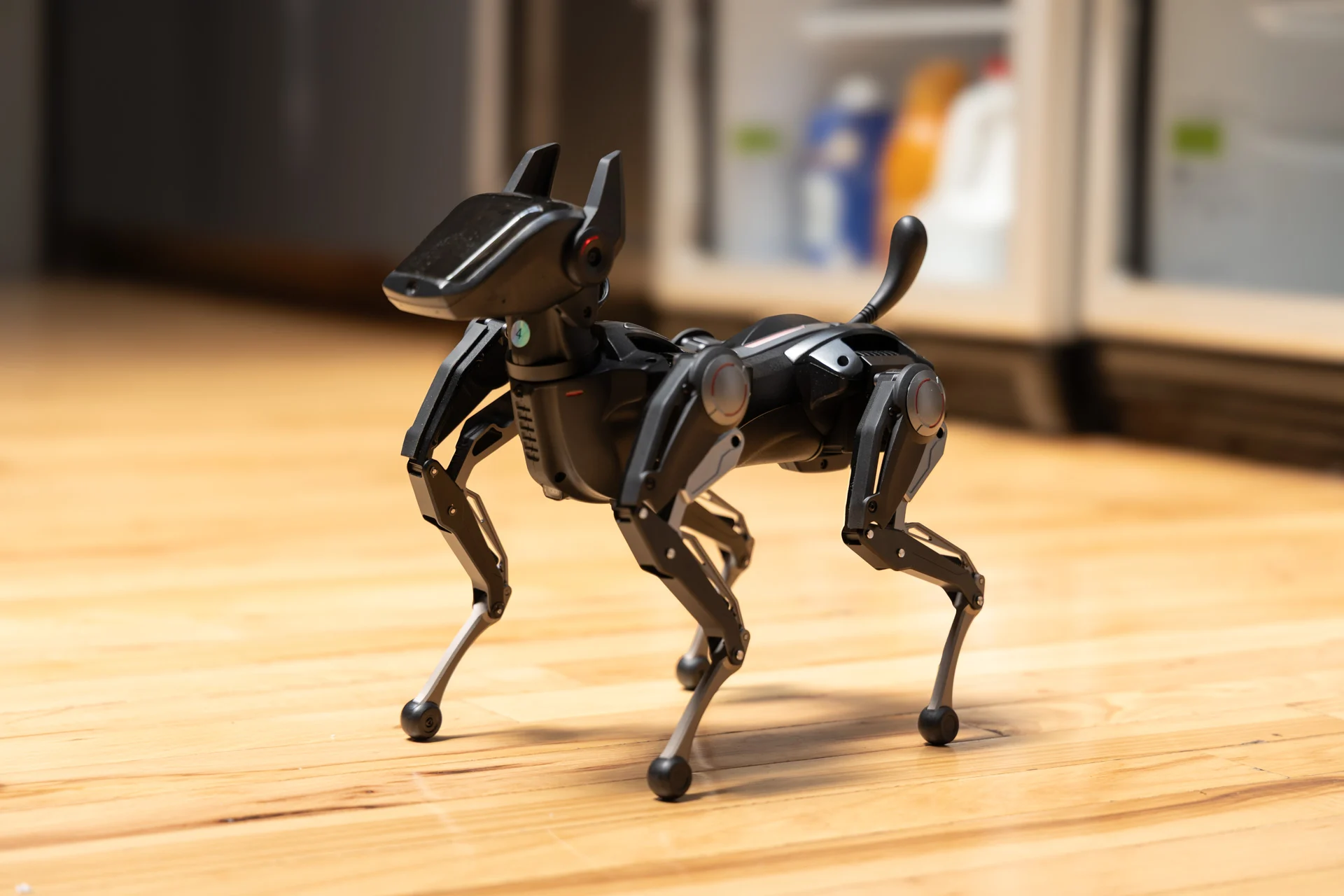
- AI robot dog: advanced students can explore vision and movement with the XGO robot dog.
More project ideas, from beginner to advanced, are in our list of STEM, robotics and AI project ideas for students.
Teach the limits of AI, not just the magic
One of the most valuable lessons is showing pupils how AI goes wrong. Train a model only on pictures of light-coloured mangoes and it may fail on green ones. This simple experiment teaches bias: an AI is only as good as the data it learns from. Pupils who understand this become more thoughtful users and builders of AI.
Getting teachers ready
- Start small: one unplugged lesson and one browser-based training activity are enough to begin.
- Learn alongside pupils: teachers do not need to be AI experts to guide exploration.
- Use AI for your own work: AI teaching assistants can draft lesson notes, quizzes and exam questions, freeing time for teaching.
- Get trained: our STEM and robotics workshops help teachers build confidence with robotics, coding and AI.
Frequently asked questions
At what age can children learn about AI?
Children can learn basic AI ideas, such as computers learning from examples, from about 7 or 8 with unplugged and browser activities. Hands-on AI robotics projects suit upper primary and JHS students.
Do students need to know coding to learn AI?
No. Younger pupils can train AI models with visual, no-code tools. Coding, especially Python, becomes important as students build more advanced AI projects.
What are good AI projects for students?
Good starter projects include an image classifier for rock, paper, scissors, a face-recognition alarm with an AI camera kit, a colour-sorting robot and a robot car that follows traffic-sign cards.
Does Ideotronix teach AI in schools?
Yes. Ideotronix's school programme includes artificial intelligence alongside robotics, coding, IoT and electronics for pupils from Primary 2 to JHS 2.