
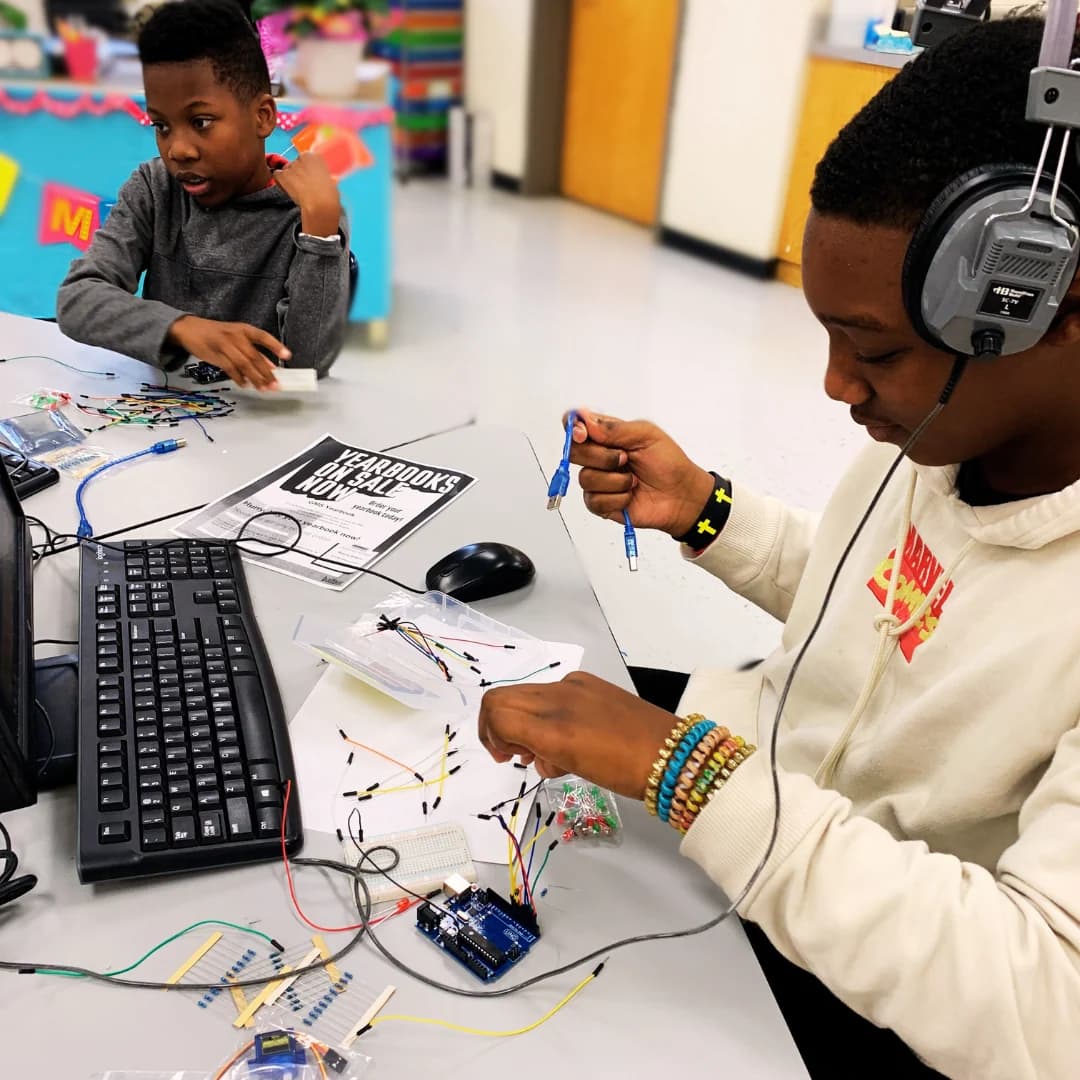
Coding is the skill of giving instructions to a computer. For children, it is much more than preparation for a tech job: it teaches them to break big problems into small steps, test ideas, learn from mistakes and create something of their own. Those habits help in maths, science, writing and life.
The good news for parents in Ghana is that children do not need an expensive laptop or prior experience to start. This guide explains when to start, what to learn first, and how to keep children motivated.
Why children should learn to code
- Logical thinking: coding trains children to plan step by step and think about cause and effect.
- Problem solving: when a program does not work, children learn to find the bug and fix it, a skill called debugging.
- Creativity: children build games, animations, robots and gadgets instead of only consuming technology.
- Confidence: seeing a robot move or a game run because of their own code is a powerful motivator.
- Future opportunities: digital skills are increasingly valuable in almost every career, from farming to finance.
What age should a child start coding?
Children can start learning the ideas behind coding as early as 5 or 6, using games and unplugged activities (no computer needed). Most children are ready for screen-based block coding by 7 or 8, and for text languages like Python from around 11 or 12. The right time depends on reading ability and interest more than age.
| Age | What to learn | Tools |
|---|---|---|
| 5 to 7 | Sequencing, patterns, simple instructions | Unplugged games, floor robots, ScratchJr |
| 8 to 10 | Block coding: loops, events, conditions | Scratch, Microsoft MakeCode, micro:bit |
| 11 to 13 | Bridging blocks to text, sensors and robots | MakeCode with micro:bit, MicroPython, robot cars |
| 14 and up | Text coding, electronics, AI and apps | Python, Arduino, Raspberry Pi Pico |
Which coding language should a child learn first?
Block coding (Scratch and MakeCode)
Block-based tools let children drag and drop instructions like puzzle pieces, so they focus on logic instead of spelling and punctuation. Scratch, created at MIT, is free and ideal for games and animations. Microsoft MakeCode works the same way and can program physical devices like the BBC micro:bit.
Python
Once children are comfortable with blocks, Python is the best first text language. It reads almost like English, is used by professionals in AI and data science, and runs on the micro:bit and Raspberry Pi Pico through MicroPython.
C++ with Arduino
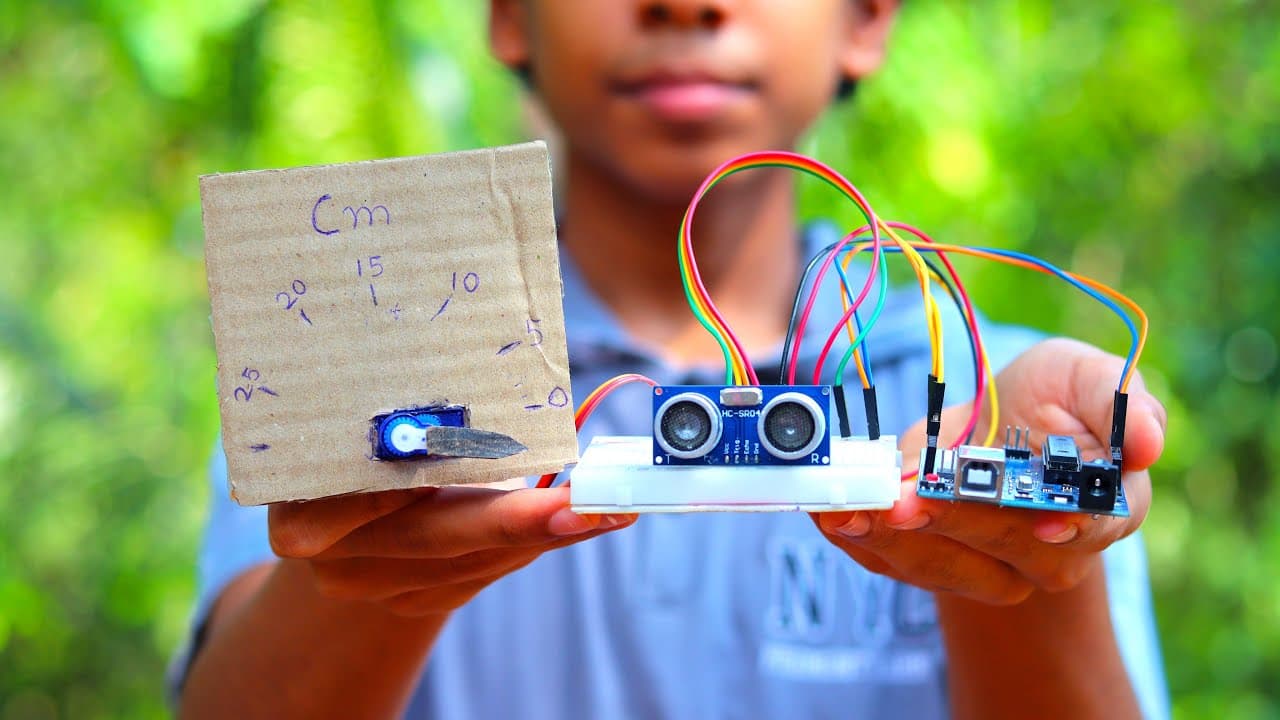
Teenagers who love electronics can move on to Arduino, which is programmed in C/C++. Not sure which board to choose? Read our comparison of micro:bit, Arduino and Raspberry Pi Pico.
Why coding with robots works so well
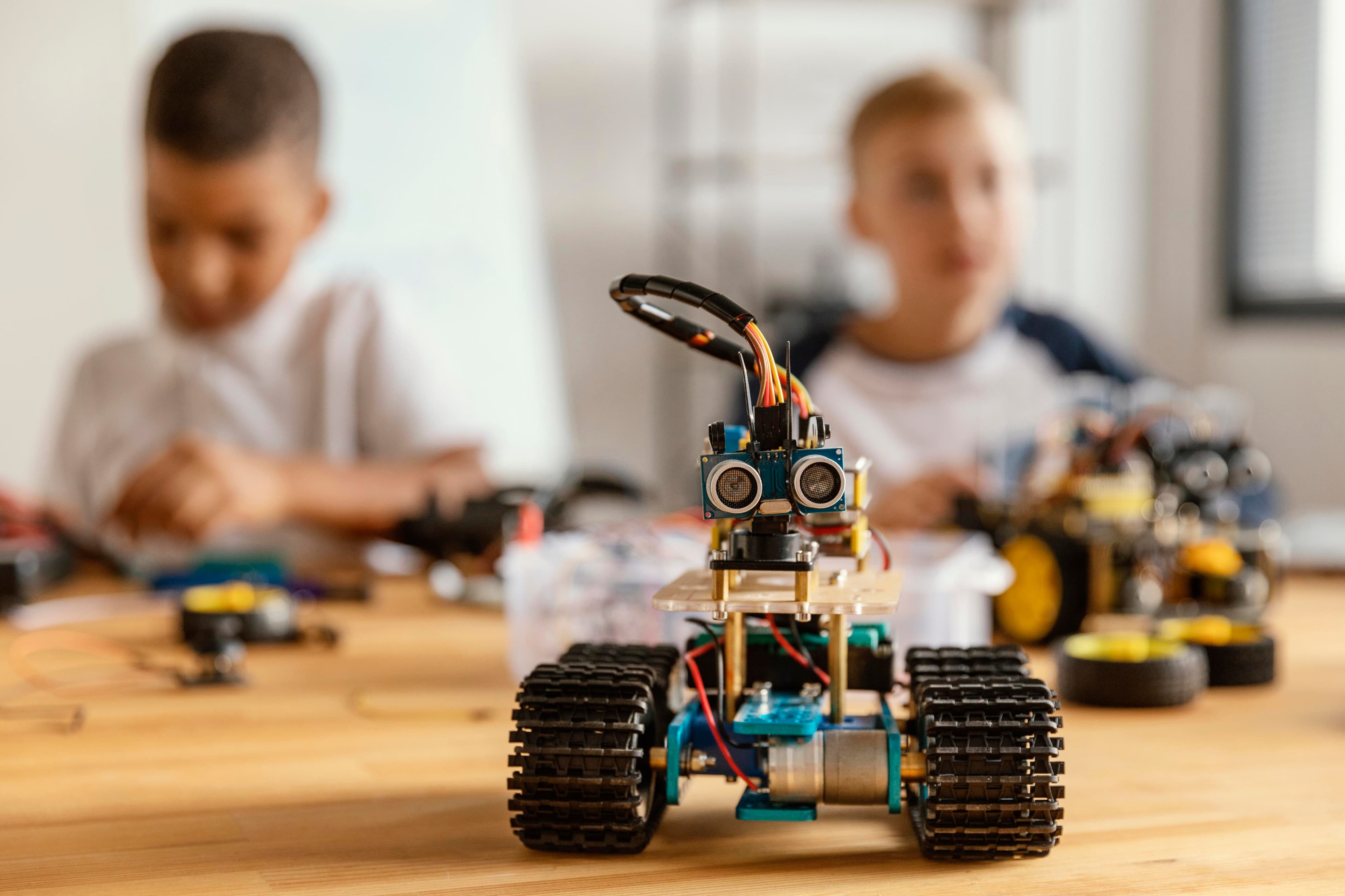
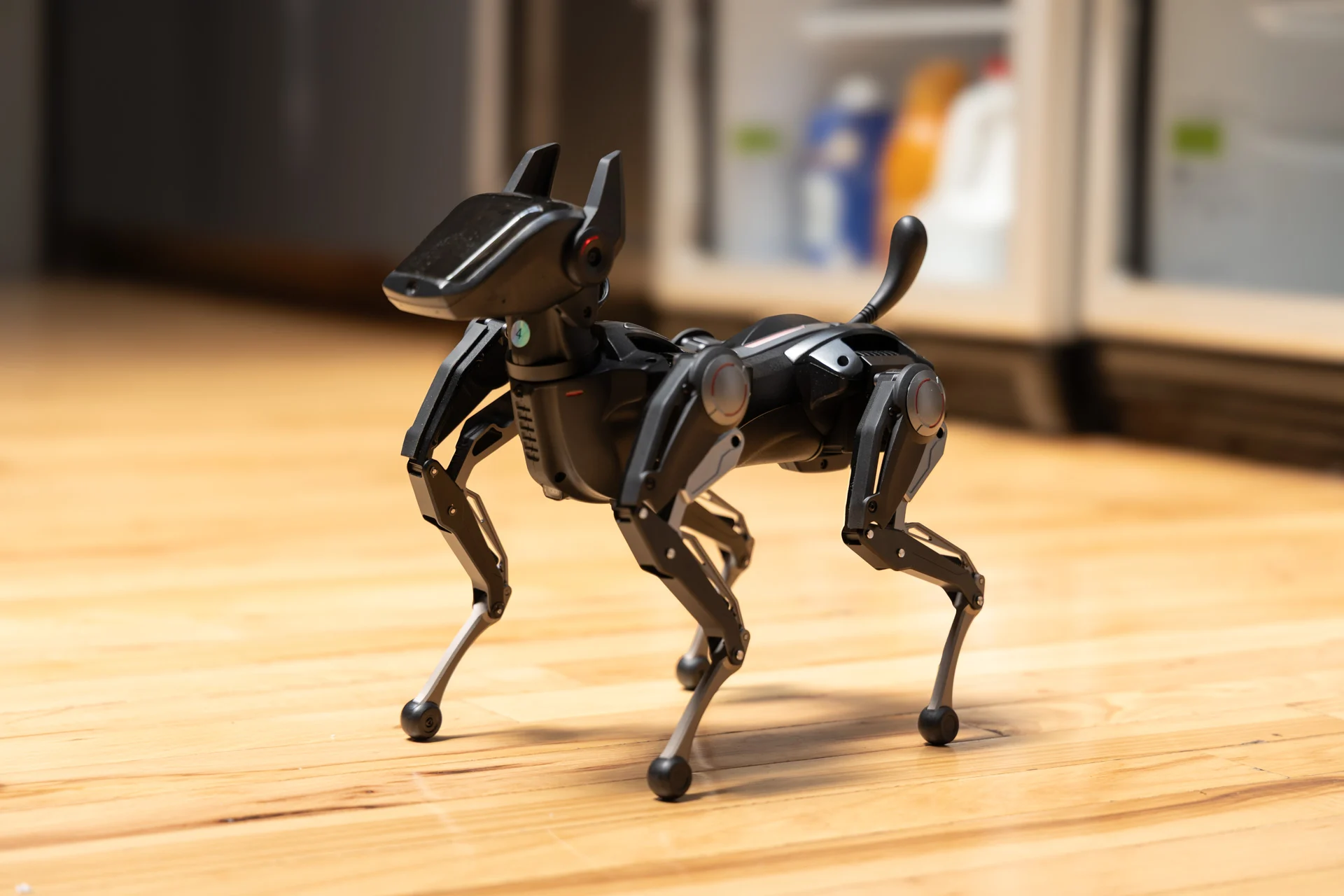
Children learn fastest when their code does something they can see and touch. When a program makes a robot drive, a buzzer sound or a light switch on, the connection between instructions and results is instant. That is why our classes combine coding with robotics and electronics from the start.
- The micro:bit TPBot car teaches coding basics by driving a robot.
- The Retro MakeCode Arcade lets children code their own handheld games.
- The Smart Coding Watch kit turns a micro:bit into a wearable they program themselves.
How to support your child at home
- Start with free tools. Scratch and MakeCode run in a web browser, and MakeCode includes a simulator, so children can practise before buying any hardware.
- Set small projects. "Make a character move" or "make the robot stop at a wall" is more motivating than long tutorials.
- Let them get stuck. Resist fixing their code. Ask "What did you expect to happen?" and "What happened instead?"
- Celebrate what they build. Ask them to show the family their game or robot.
- Keep sessions short. 30 to 45 minutes, two or three times a week, works better than one long session.
Coding classes for kids in Ghana
Structured classes give children a clear path, a teacher to help when they are stuck, and friends to build with. Ideotronix offers robotics and coding classes through partner schools, holiday camps during school breaks and online courses children can follow at their own pace.
Frequently asked questions
What is the best age for a child to start coding?
Children can learn coding ideas from about 5 or 6 with games and unplugged activities, start block coding around 7 or 8, and move to Python from about 11 or 12.
What coding language should kids learn first?
Start with block coding in Scratch or Microsoft MakeCode, then move to Python. Teenagers interested in electronics can later learn C/C++ with Arduino.
Does my child need a laptop to learn coding?
A computer or tablet helps, but children can start with unplugged activities and free browser tools. Many schools and coding classes provide the devices and kits.
Where can my child learn coding in Ghana?
Ideotronix offers coding and robotics classes through partner schools, holiday camps and online courses for children in Ghana.