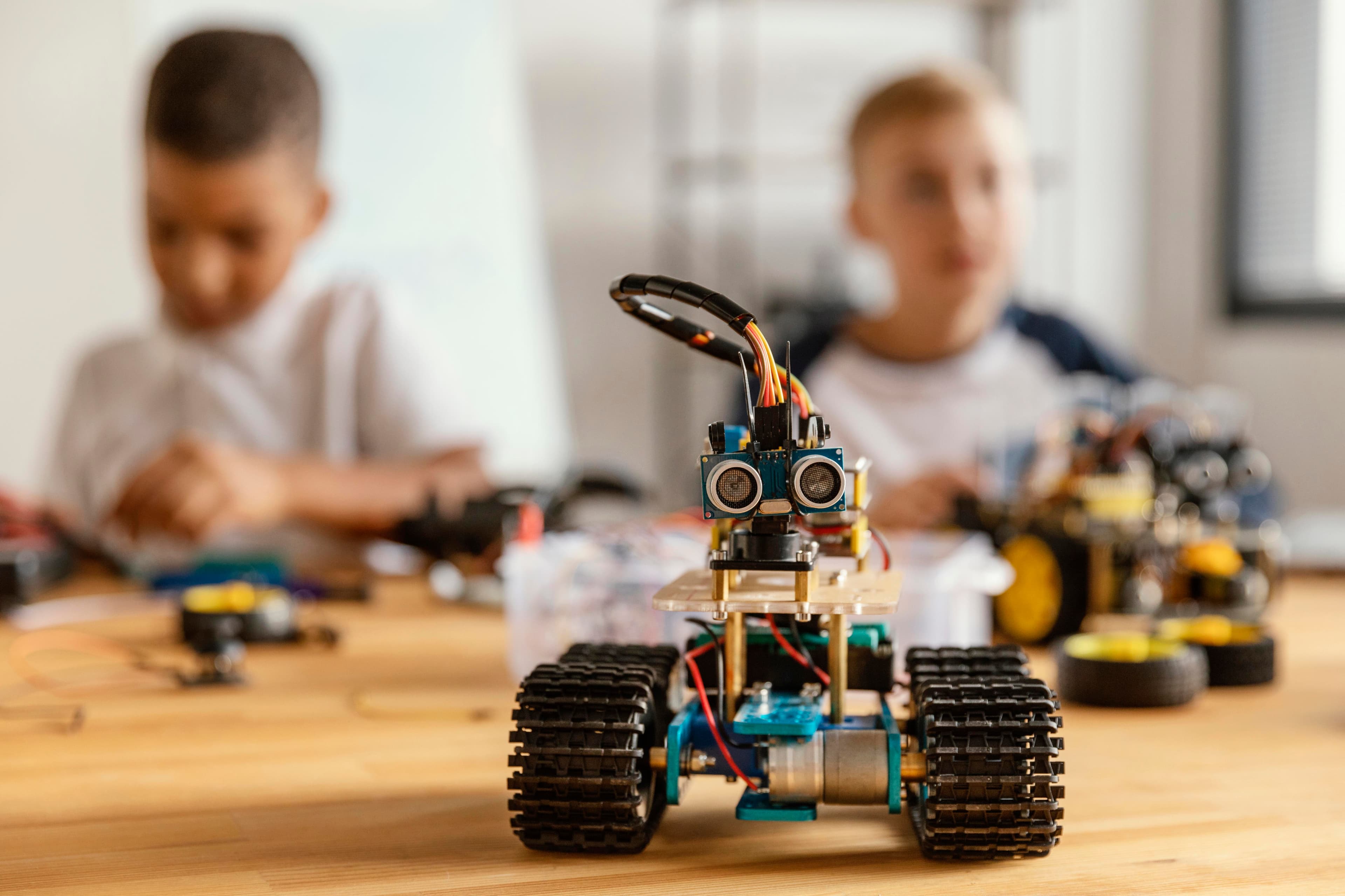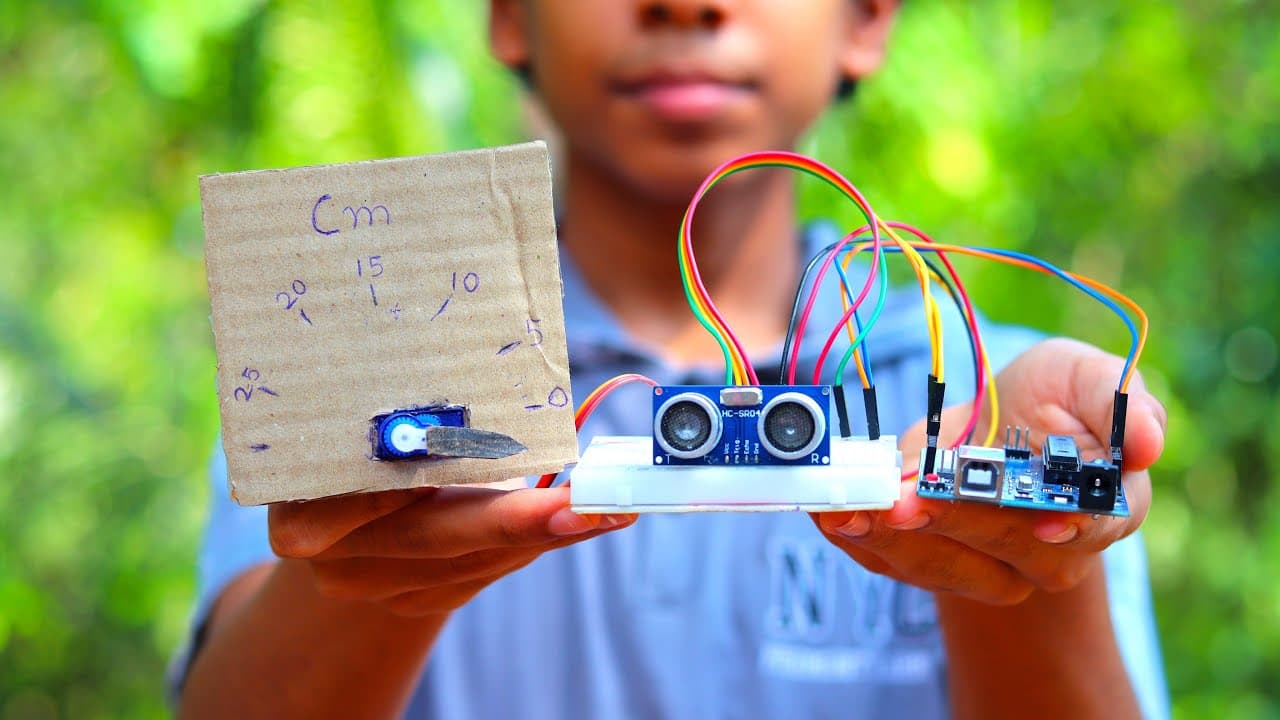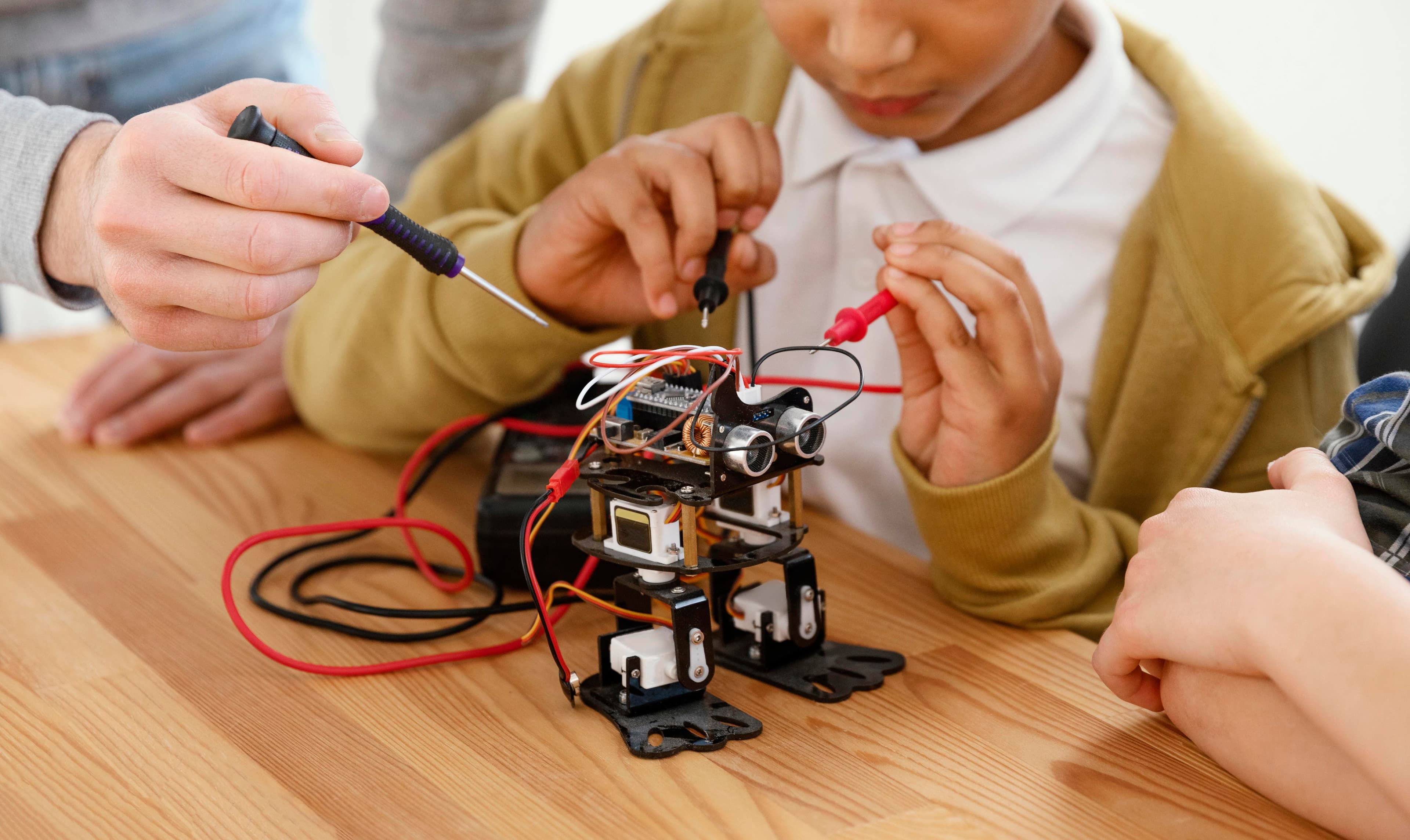

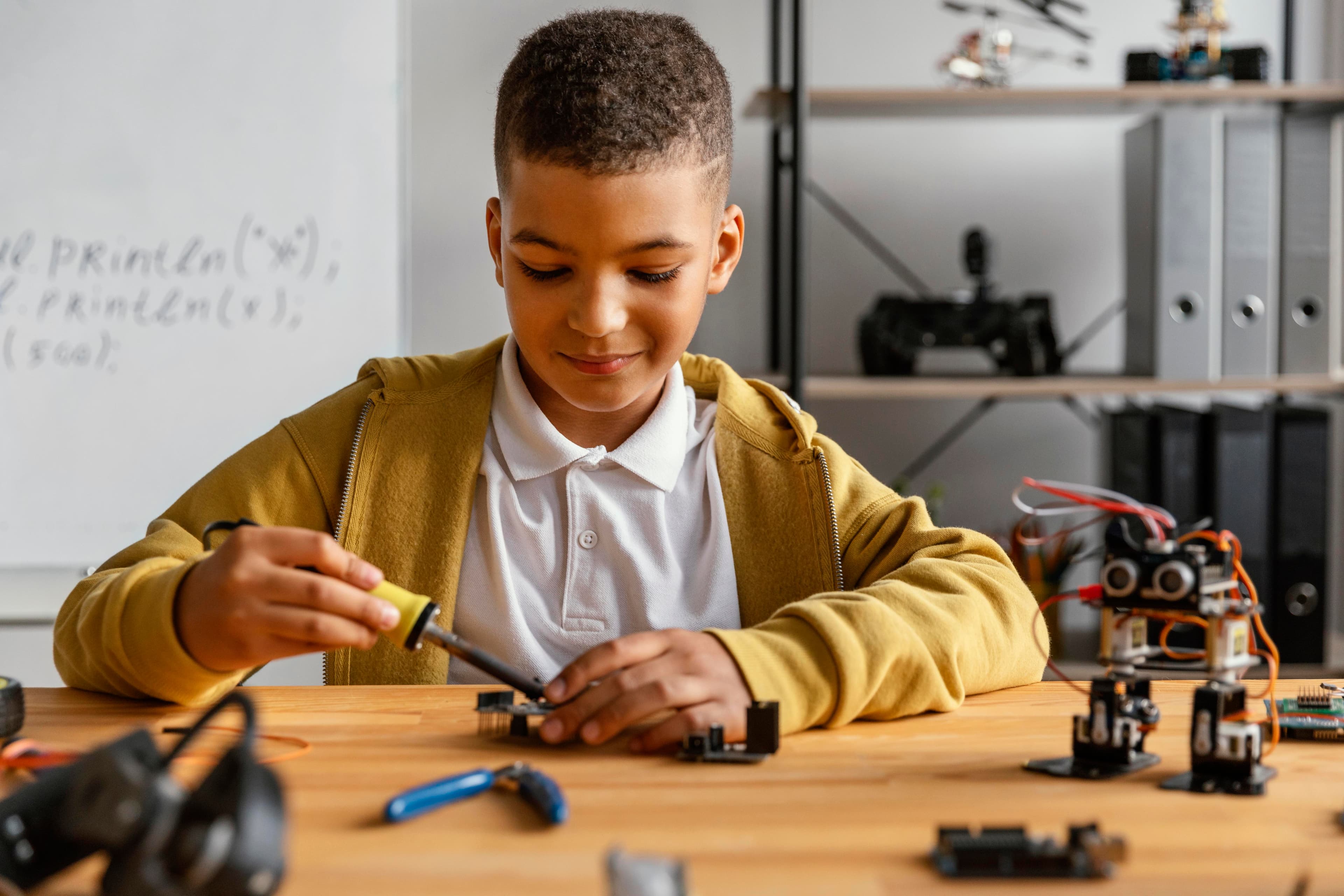
Every school break, parents across Ghana face the same question: how do we keep the children learning and busy without more of the same classroom routine? A STEM holiday camp answers both. Children spend their days building robots, writing code, wiring circuits and solving challenges with friends, and they come home excited to show what they made.
This guide explains what happens at a robotics or coding camp, what children of different ages can achieve, how to judge camp quality, and how schools and organisations can host their own.
What is a STEM holiday camp?
A STEM holiday camp is a short, intensive program, usually several days to two weeks, held during school breaks. Unlike regular classes, camps are built around projects: each day students learn a concept and immediately use it to build something. Most camps end with a showcase where children demonstrate their projects to parents.
Common types include:
- Robotics camps: build and program robot cars, robotic arms or walking robots, often ending in a challenge such as a maze race or robot soccer.
- Coding camps: learn programming through games, animations and apps, moving from block coding to Python as students progress.
- Electronics and maker camps: circuits, sensors and inventions such as alarms, smart lights and weather stations.
- AI camps: for older students, covering how machines see and learn, with AI camera modules and simple machine learning projects.
A sample one-week robotics camp
| Day | Theme | What children build |
|---|---|---|
| Day 1 | Meet the micro:bit | Light patterns, a name badge and a step counter. First taste of block coding |
| Day 2 | Sensors and inputs | A temperature alarm, a light-activated night light and a reaction-time game |
| Day 3 | Motors and movement | Assemble a robot car, then make it drive, turn and dance |
| Day 4 | Smart robots | Line-following and obstacle-avoiding robots using infrared and ultrasonic sensors |
| Day 5 | Challenge and showcase | Team robot challenge (maze, race or robot soccer), then a project demo for parents |
Older or more experienced campers can follow the same structure with Arduino or Raspberry Pi Pico and text-based programming.
Why camps work so well
- Momentum: daily, focused sessions build skills much faster than one hour a week.
- Learning by doing: children remember what they build far better than what they copy from a board.
- Social confidence: teamwork, presenting projects and friendly competition build soft skills.
- Discovering interests: a camp is a low-commitment way to find out whether a child loves robotics, coding or electronics before investing in longer programs.
How to choose a good robotics or coding camp
- Ratio of children to kits: two or three children per kit is ideal. Watching others build is not learning.
- Age grouping: a 7-year-old and a 14-year-old need very different activities.
- Instructor quality: ask who runs the sessions and what training they have.
- Clear outcomes: the camp should tell you what your child will build and learn by the last day.
- Safety: supervision, safe tools and age-appropriate kits.
- Continuation: good camps show children how to keep learning afterwards, through online courses or a home kit.
STEM activities for kids at home during the holidays
If a camp is not possible, you can create a mini-camp at home:
- Pick a beginner robotics kit and set one project per day.
- Pair it with a self-paced course for structure.
- Set a family challenge, for example: build something that solves a problem in our house.
- End the holiday with a home showcase for relatives. Children love an audience.
- Browse our list of STEM project ideas for students for inspiration.
For schools and organisations: hosting a STEM camp
Schools, churches, community centres and companies increasingly host holiday camps for their students, members or employees' children. Hosting is a great way to make use of facilities during breaks and to give children access to STEM close to home. Ideotronix can help you plan a camp, including the curriculum, kits, facilitators and the final showcase.
Frequently asked questions
What age is right for a robotics camp?
Most robotics camps welcome children from about age 7 or 8, grouped by age and experience. Younger children do playful building and block coding. Teenagers can work with Arduino, Raspberry Pi Pico, Python and AI projects.
Does my child need experience to join a coding camp?
No. Beginner camps start from zero, usually with block-based coding. Experienced children should look for intermediate or advanced groups.
What will my child bring home from a STEM camp?
Skills, confidence and usually a project portfolio: photos and videos of what they built and coded. Some camps include a kit to keep, so children can continue at home.
Can my school host a STEM holiday camp?
Yes. Schools and community organisations can host camps for their students or local children. Ideotronix helps with planning, kits and facilitation. Contact us to discuss your group.