
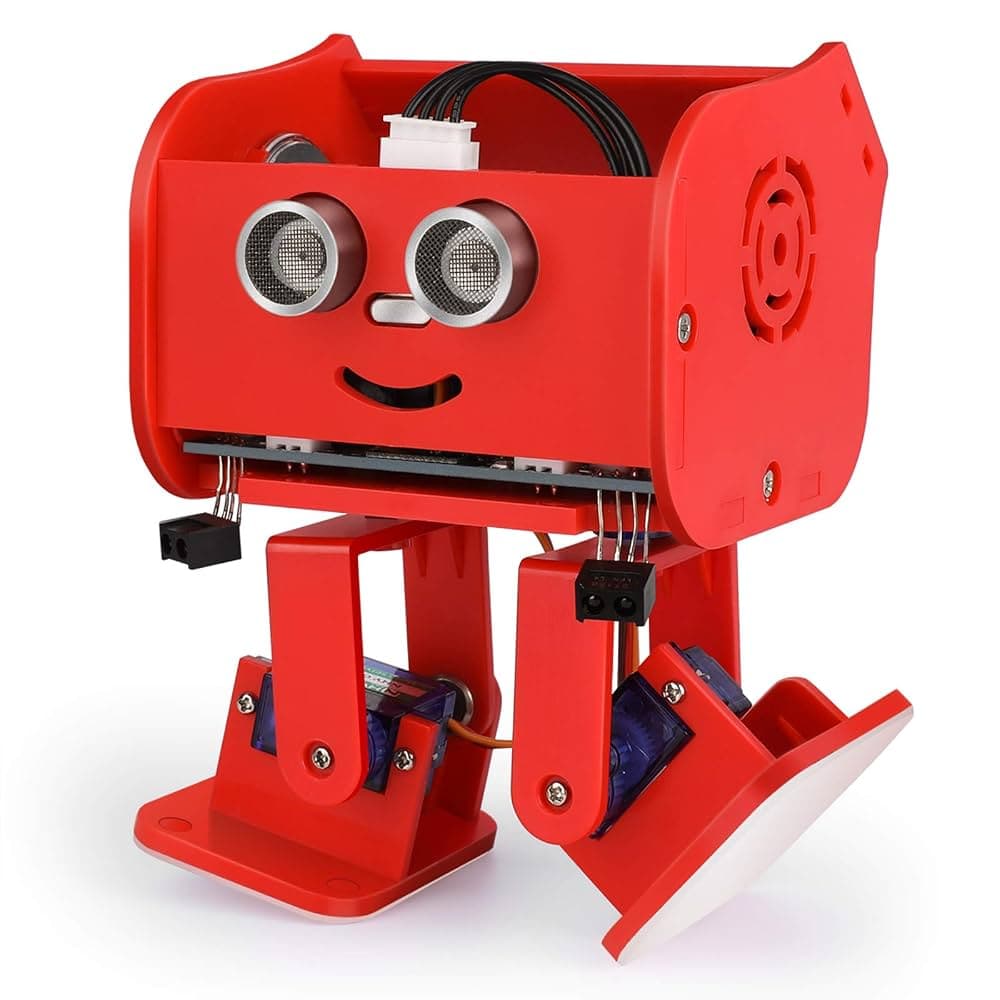
Search for STEM kits for kids and you will find thousands of options: robot cars, circuit boards, coding toys, science sets and more. Some will spark years of learning. Others end up forgotten after an afternoon. The difference usually comes down to choosing the right kit for the child's age, skill level and interests, and choosing kits that grow with them.
This buying guide explains the difference between STEM toys and STEM learning kits, recommends the right type of kit for each age, and lists what to check before you buy, whether for home or a classroom.
STEM toys vs STEM learning kits
STEM toys (including most STEM toys for kids under 8) are designed primarily for play, such as building blocks, simple coding robots and magnetic tiles. They are great for younger children and for sparking curiosity.
STEM learning kits are designed to teach transferable skills like programming, electronics and engineering design through guided projects. They usually include a programmable board (micro:bit, Arduino or Raspberry Pi Pico), sensors and project guides. A good learning kit can be rebuilt into many projects, so it keeps teaching long after the first build.
Types of STEM kits explained
Shops use many names for STEM kits. Here is what the most common types mean, so you can compare like with like.
| Kit type | Also called | What children learn |
|---|---|---|
| STEM circuit kits | Circuit board kits for students, educational circuit building kits, electronic circuit learning kits | How current flows, switches, LEDs, resistors and sensors. The foundation of all electronics |
| STEM electronics kits | Educational electronic kits, kids electronics kits, electronic learning kits | Programmable boards, sensors and outputs, usually with coding |
| STEM engineering kits | STEM building kits, STEM engineering toys | Structures, gears, motors and mechanisms, often building a vehicle or robot |
| Robotics kits | STEM project kits | Combining building, electronics and coding into a robot that senses and moves |
| STEM science kits | STEM experiment kits, STEM activity kits | Measuring the world with sensors: temperature, light, soil moisture, air quality |
| STEM education kits | STEM curriculum kits, STEM classroom kits | Kits designed for teachers, with lesson plans and enough parts for groups |
| STEM learning toys | Educational toys STEM, STEM learning products | Play-first products that build curiosity, sequencing and problem-solving |
For most children, STEM electronics kits and robotics kits give the best long-term value, because they are programmable and can be rebuilt into dozens of projects. STEM science kits for kindergarten and preschool STEM kits are better as play-first introductions for the youngest learners.
The best STEM kits by age
Ages 4 to 7: preschool and early-years STEM
Focus on building, sorting, patterns and cause and effect. Preschool STEM kits and STEM science kits for kindergarten should have sturdy pieces with no tiny parts, simple building challenges and screen-free coding games. STEM learning toys and STEM engineering toys work well here. At this age the adult's involvement matters more than the kit.
Ages 8 to 10: first coding and circuit kits (STEM kits for elementary and primary school)
This is the ideal age for micro:bit-based kits with block coding. Good options include touch-input circuit kits like the Bitboard kit, a coding watch kit, and a first robot car like the TPBot Edu car kit.
Ages 11 to 13: sensor, smart-system and robotics kits
Children this age enjoy kits that solve real problems. Try a smart home kit, a smart agriculture kit or the Jacdac smart exploration kit, which uses plug-and-play sensors. Competitive kids love robot soccer with the Cutebot football kit.
Ages 14+: STEM kits for teens and high school students
STEM kits for teenagers and STEM kits for high school students should use real engineering platforms. Teenagers are ready for text-based coding and real engineering platforms: the Ideotronix Starter Kit for Arduino electronics, the Raspberry Pi Pico starter kit or Wukong2040 inventor's kit, and AI kits like the AI lens kit. Advanced learners can take on walking and AI robots such as the PU humanoid robot.
| Age | Kit type | Skills built |
|---|---|---|
| 4 to 7 | Building and early coding toys | Patterns, sequencing, fine motor skills |
| 8 to 10 | micro:bit circuit and first robot kits | Block coding, simple circuits, inputs and outputs |
| 11 to 13 | Sensor, smart-system and robotics kits | Sensors, automation, design thinking, teamwork |
| 14+ | Arduino, Raspberry Pi Pico and AI kits | Text-based coding, electronics, AI and computer vision |
What to check before buying a STEM kit
- Programmable or fixed? Programmable kits can be rebuilt into many projects. Fixed kits usually build just one thing.
- Project guides: check for clear, step-by-step projects and online tutorials.
- What is included: some kits need a micro:bit board, batteries or a computer that is sold separately. Read the listing carefully. Many of our kits say "without micro:bit board".
- Expandability: can you add sensors, motors or building blocks later?
- Durability and spares: important for classrooms. Look for robust parts and available replacements.
- Coding environment: free, browser-based editors (like MakeCode) mean no expensive software.
- Safety and age guidance: small parts and batteries need supervision for younger children.
STEM kits for schools and classrooms
STEM kits for elementary classrooms and STEM kits for elementary schools (primary schools in Ghana) should come with teacher guides and enough parts for group work. For classrooms, choose a single platform across year groups (for example micro:bit for primary and JHS, then Arduino or Pico for SHS), so teachers only master one ecosystem. Buy one kit per group of two to four students, plus spares. Make sure the kits match a curriculum. Our guide to setting up a STEM lab covers this in detail, and schools can request a bulk quote.
Getting the most from a STEM kit
- Complete the guided projects first, then challenge your child to modify one.
- Pair the kit with a structured online course.
- Set a goal, such as a science fair project or a family showcase.
- Store parts in labelled containers so nothing goes missing.
Frequently asked questions
What is the best STEM kit for a beginner?
For children aged about 8 to 12, a micro:bit-based kit with block coding and guided projects is the best starting point. Teens and adults new to electronics often start with an Arduino or Raspberry Pi Pico starter kit.
What is the difference between STEM toys and STEM kits?
STEM toys focus mainly on play and curiosity, especially for younger children. STEM learning kits teach transferable skills like coding and electronics through guided, programmable projects that can be rebuilt many times.
Are STEM kits good for teenagers?
Yes. Teenagers benefit most from kits based on real engineering platforms such as Arduino, Raspberry Pi Pico and AI camera modules, which teach text-based programming and more complex electronics.
Do STEM kits need a computer?
Most programmable kits need a computer, laptop or tablet to write and upload code. Many use free, browser-based editors, so an internet-connected device with a modern browser is usually enough.