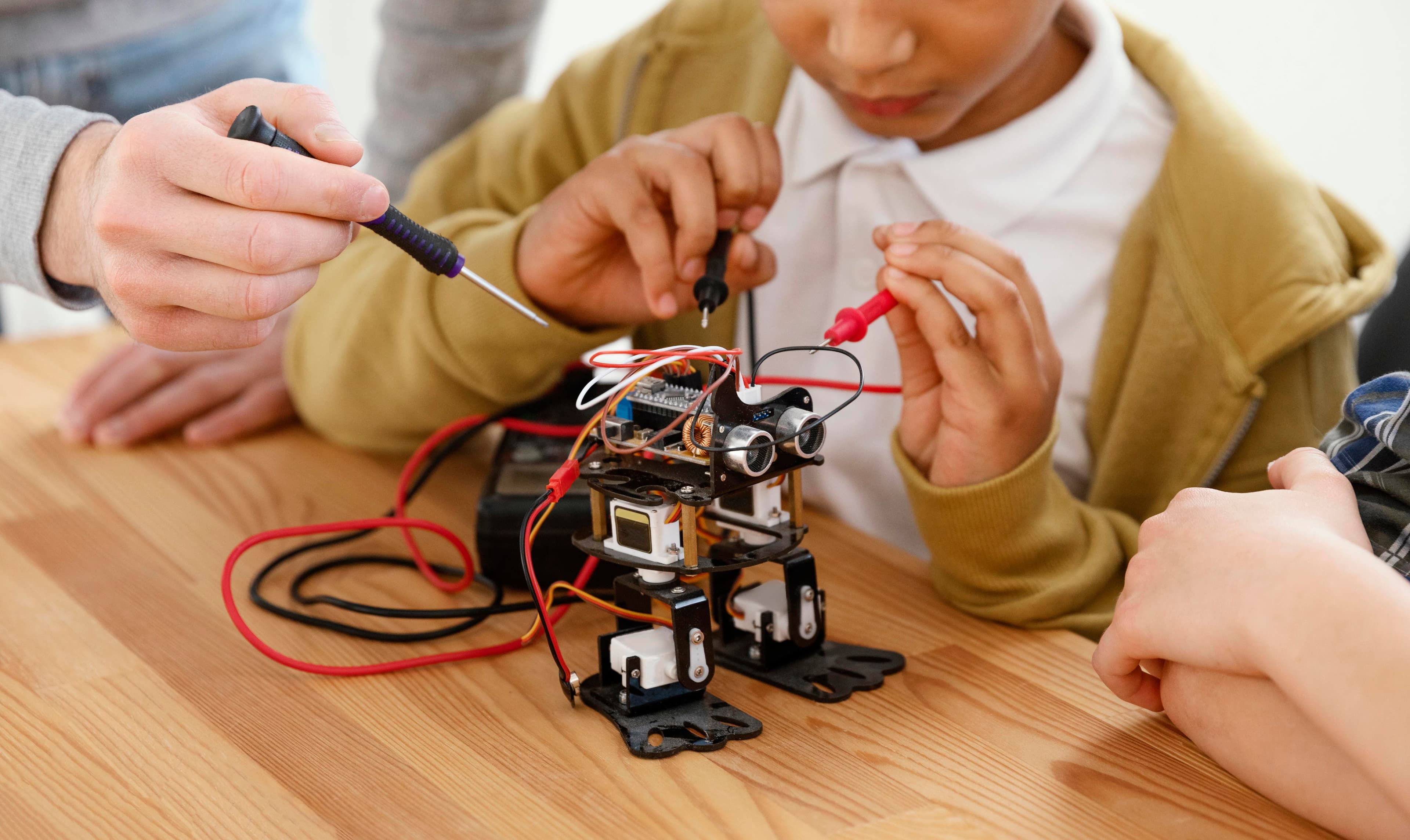

A STEM lab (or makerspace) is the foundation for STEM and robotics for schools in Ghana. It is a dedicated space where students build, code and experiment with real technology: circuits, sensors, robots, microcontrollers and more. For many schools in Ghana, it is the single biggest step from teaching STEM in theory to teaching it in practice.
The good news is that a STEM lab does not need to start as a large, expensive project. This guide walks through planning, equipping and running a STEM laboratory in phases, so you can launch quickly and grow with confidence.
Step 1: Define what the lab is for
Before buying anything, agree on a few clear goals. The answers shape every other decision:
- Which year groups will use the lab, and how many hours a week?
- Will it support timetabled lessons, an after-school club, competitions, or all three?
- What should a student be able to build or do after one year? For example: program a robot to navigate a maze, or build a sensor-based smart farm model.
- Who will manage the lab day to day?
Step 2: Prepare the space
Any ordinary classroom can become a STEM lab. What matters most:
- Large, flat work surfaces: group tables are better than individual desks. Plan for groups of two to four.
- Power: enough safe sockets and extension boards for laptops and charging. Consider surge protection, and a backup plan for power outages, such as rechargeable batteries for kits.
- Storage: labelled bins or cabinets so every kit and component has a home. Lockable storage protects your investment.
- Display space: shelves or a corner to show off student projects. This motivates learners and impresses visiting parents.
- Ventilation and lighting: essential for close work with small components.
Step 3: Choose STEM equipment for schools and kits
This is where most schools overspend or buy the wrong things. Choose equipment that matches your students' ages, supports a curriculum, and can be reused year after year.
| Category | Examples | Why it matters |
|---|---|---|
| Microcontroller boards | BBC micro:bit, Arduino, Raspberry Pi Pico | The brain of every project. Micro:bit suits beginners, Arduino and Pico suit older students |
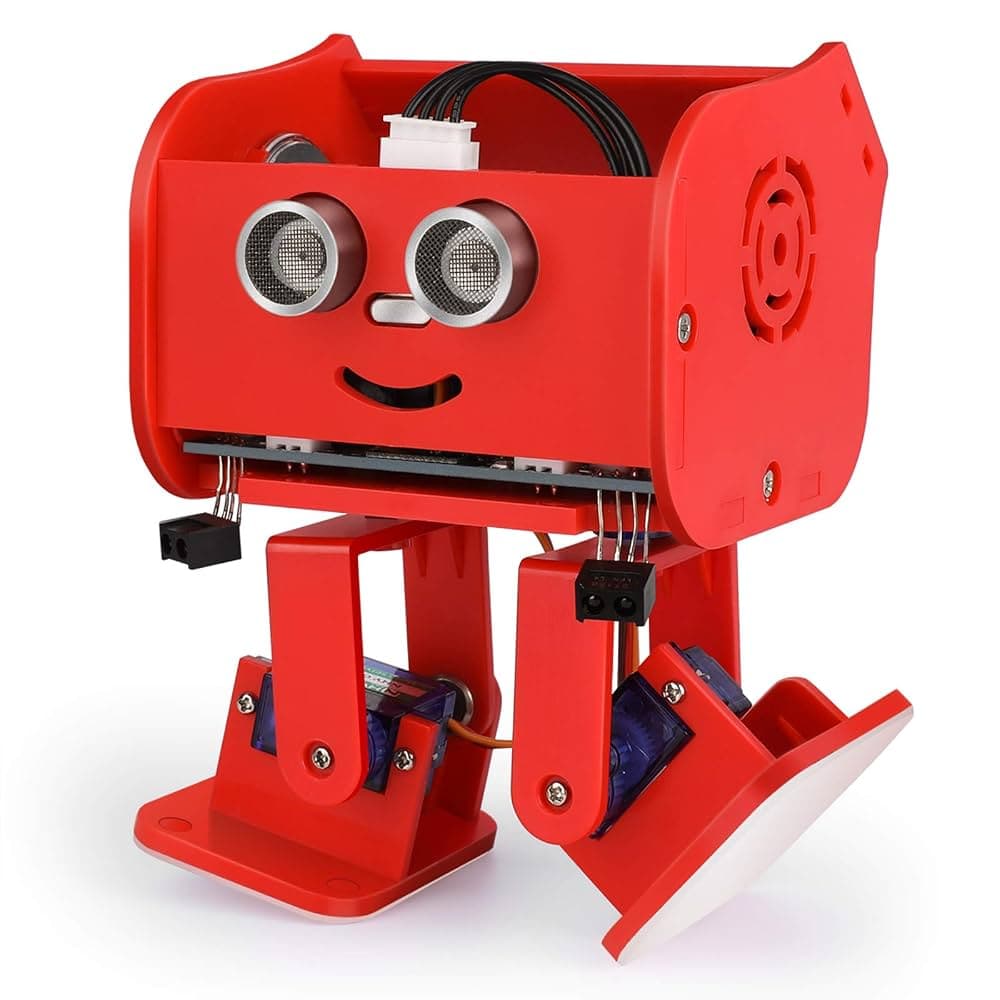
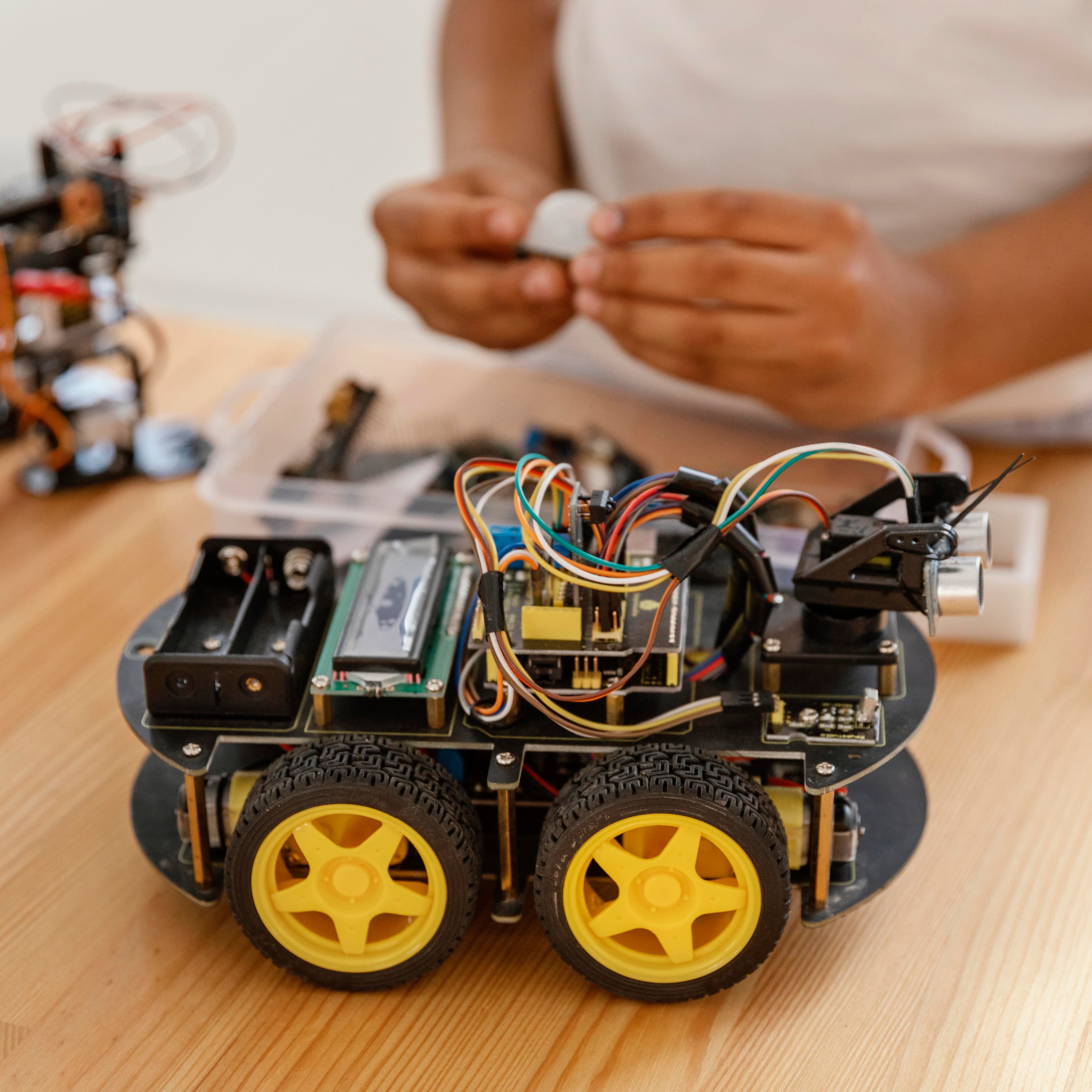
| Robotics kits | Robot cars, programmable humanoid robots, soccer robots | Make coding visible and exciting, and are ideal for clubs and competitions |
| Sensor and IoT kits | Smart home, smart agriculture, smart climate and air-quality kits | Connect STEM to real-world problems students care about |
| Electronics components | Breadboards, LEDs, resistors, jumper wires, motors, servos | For open-ended projects and replacing worn parts |
| Computers | Laptops or desktops, even modest ones | For coding. Many block-based editors run in a web browser |
| Tools | Screwdrivers, wire strippers, multimeters, glue guns (supervised) | For building, measuring and repairing |
Browse classroom-ready options in our robotics kits and electronics and sensors collections. Examples include the classroom smart home kit, the smart agriculture kit and the classroom air purifier kit.
Step 4: Budget in phases
A phased budget lets you launch quickly, prove impact and then justify further investment to your board or PTA.
- Phase 1 (Launch): one set of beginner kits for a single class or club, basic tools, storage and teacher training.
- Phase 2 (Expand): sensor and IoT kits, robotics kits for more year groups, and competition equipment.
- Phase 3 (Advanced): Arduino and Raspberry Pi Pico for senior students, AI camera modules and advanced robots, plus a dedicated project display area.
Schools can request a tailored quote for bulk STEM kits and equipment through our contact form.
Step 5: Plan the curriculum
Equipment without a curriculum quickly ends up in a cupboard. Map out a term-by-term sequence for each year group: what students will learn, which kit they will use, and which project shows they have learned it. Link lab activities to the science, maths and computing topics already in your syllabus so the lab supports exam subjects instead of competing with them.
Step 6: Train your teachers
The most important STEM lab investment is your teachers. Plan practical training before the lab opens, so teachers have built every project themselves, can troubleshoot common problems and can run sessions confidently. Hands-on workshops are an effective way to do this.
Step 7: Set safety rules and routines
- Clear lab rules displayed on the wall and explained in the first session.
- Supervision for tools like glue guns and soldering irons, and age guidance for each kit.
- Battery handling and charging rules. Never leave charging equipment unattended.
- A pack-away routine at the end of each session, with checklists for every kit.
Step 8: Showcase and measure impact
Hold a project exhibition at the end of each term, enter STEM and robotics competitions, and track simple measures such as the number of students participating, projects completed and competition results. This evidence helps you secure support for the next phase.
Frequently asked questions
What equipment is needed for a STEM lab?
A basic STEM lab needs microcontroller boards (such as micro:bit or Arduino), robotics kits, sensor kits, electronic components like breadboards, LEDs and motors, computers for coding, basic tools and good storage. Exact needs depend on student ages and goals.
How much does it cost to set up a STEM lab in Ghana?
Costs vary widely with the number of students, the type of kits and whether computers are already available. Many schools keep costs manageable by starting with one class set of beginner kits and adding equipment in phases. Ideotronix can prepare a tailored quote.
Can a school set up a STEM lab without a dedicated room?
Yes. Many schools start with a mobile STEM lab: kits stored in labelled boxes on a trolley and brought into ordinary classrooms. A dedicated room can come later.
Who will teach in the STEM lab?
Existing science, maths and ICT teachers can run the lab well with practical training and lesson plans. Ideotronix offers teacher training as part of its school programs.