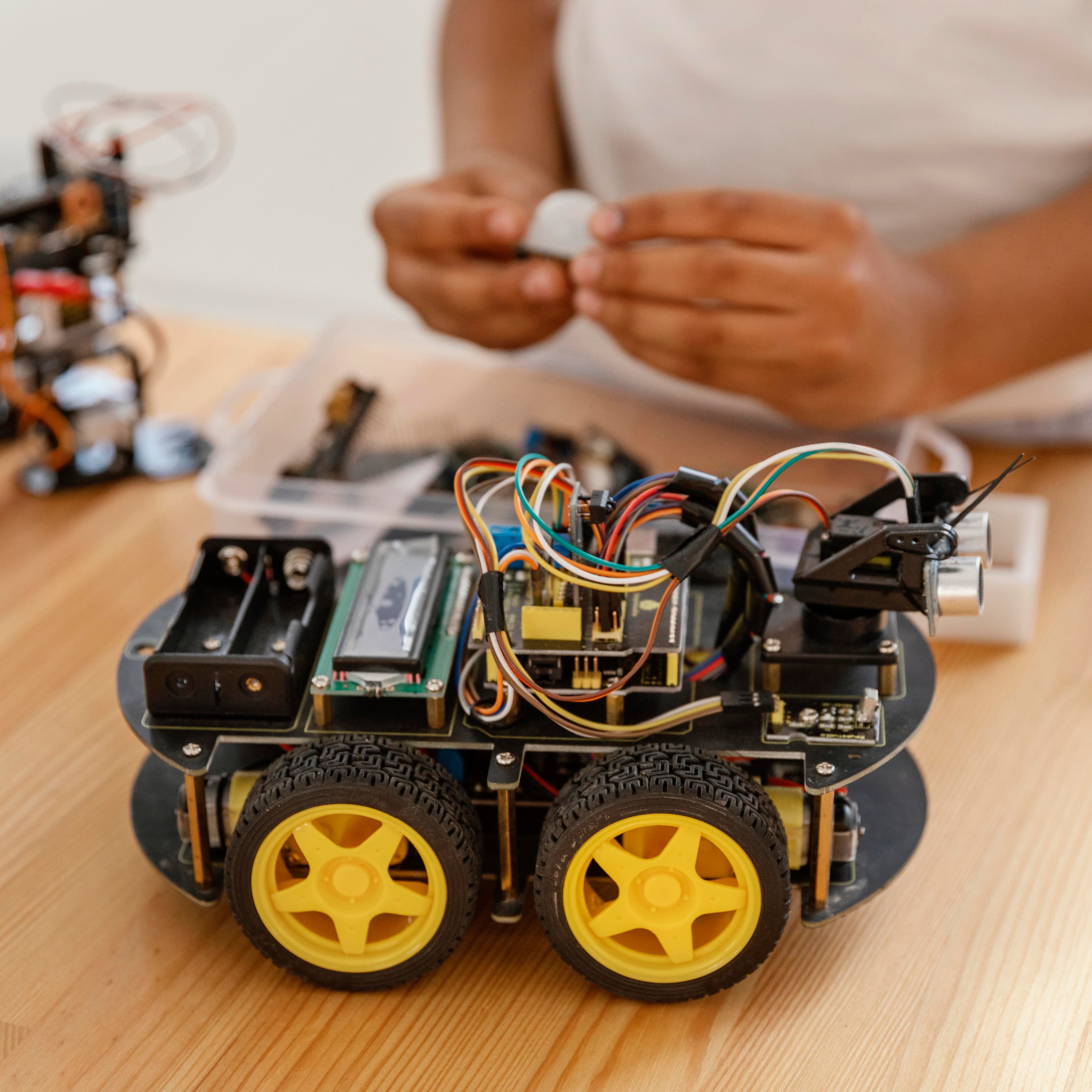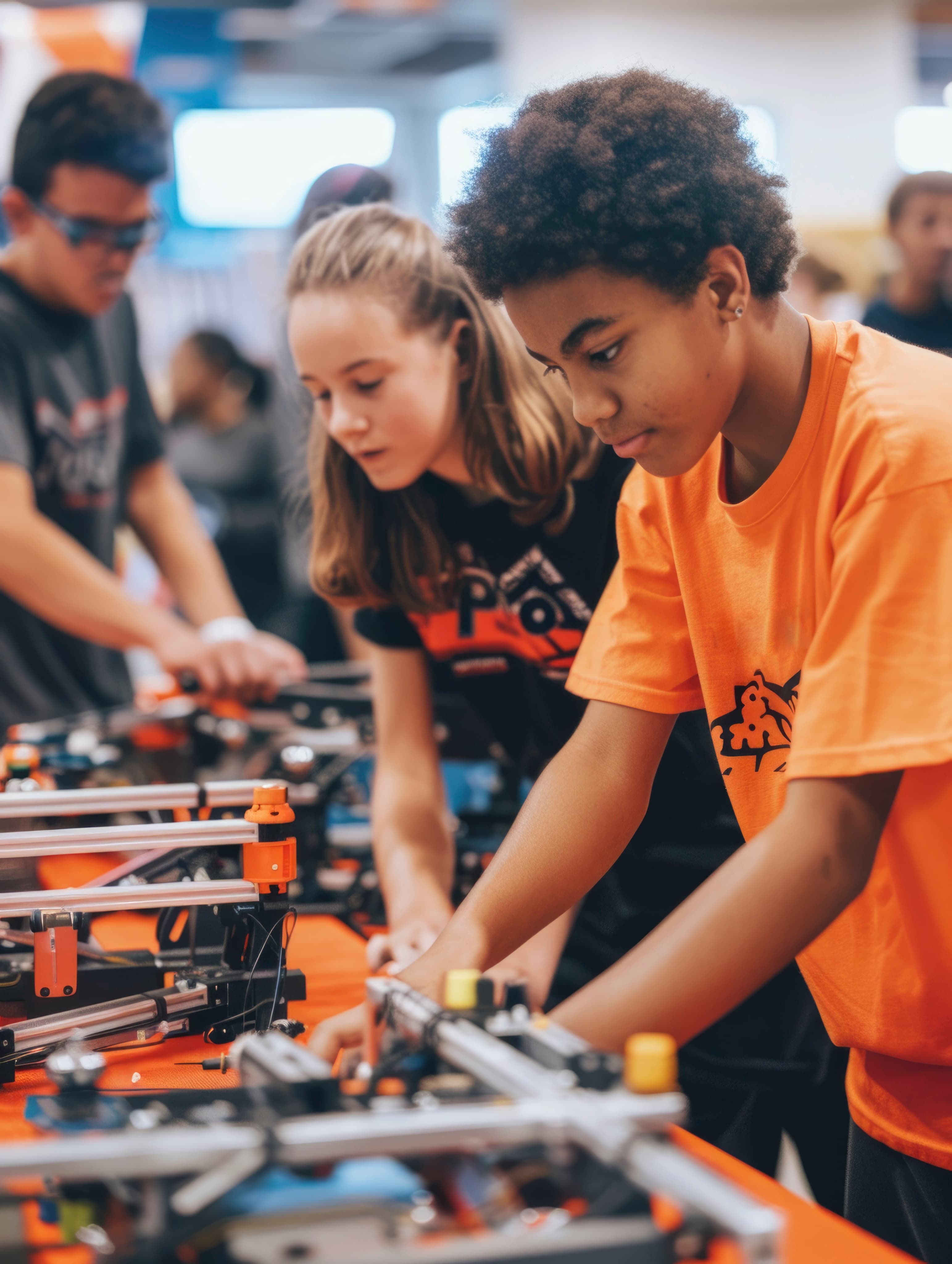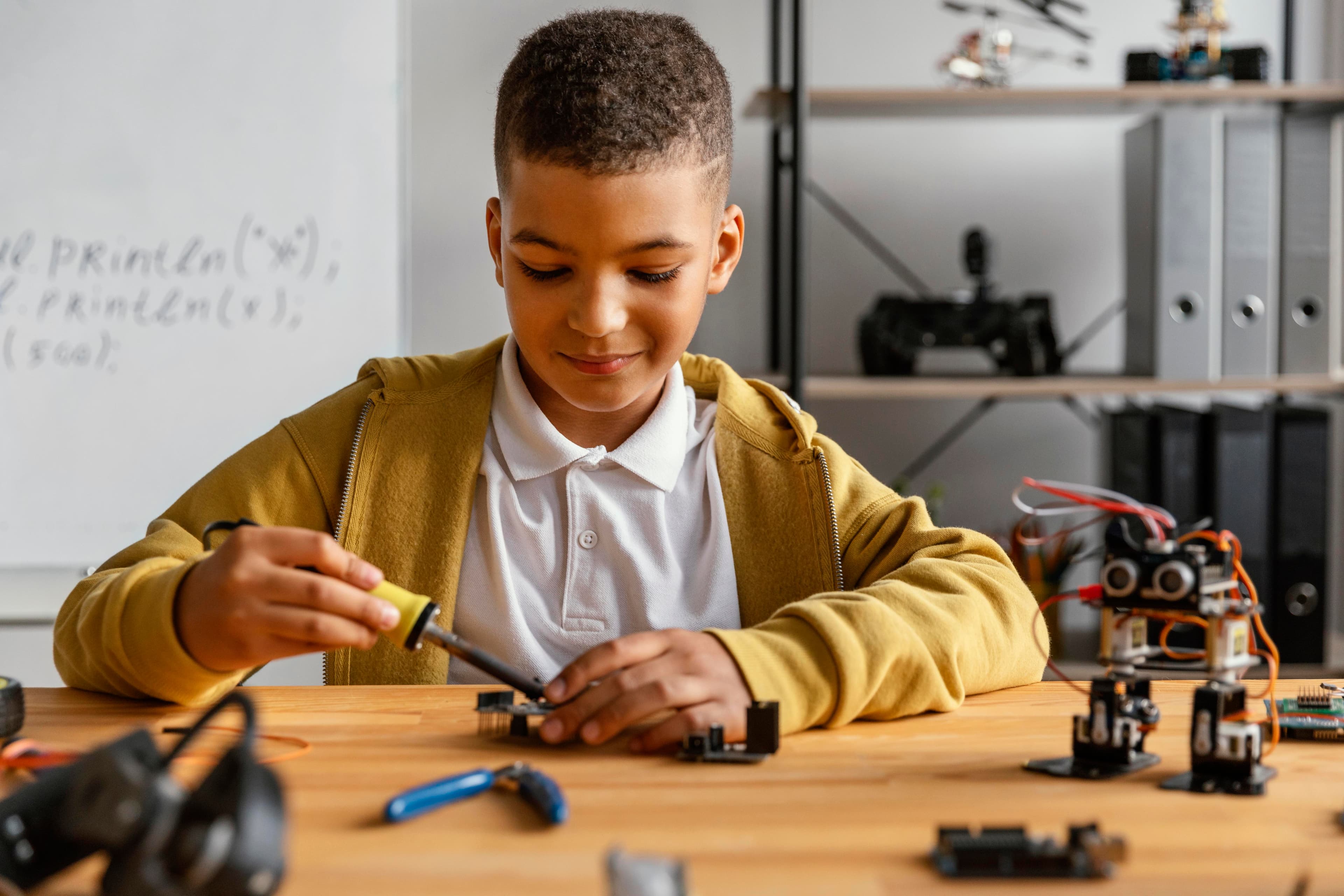

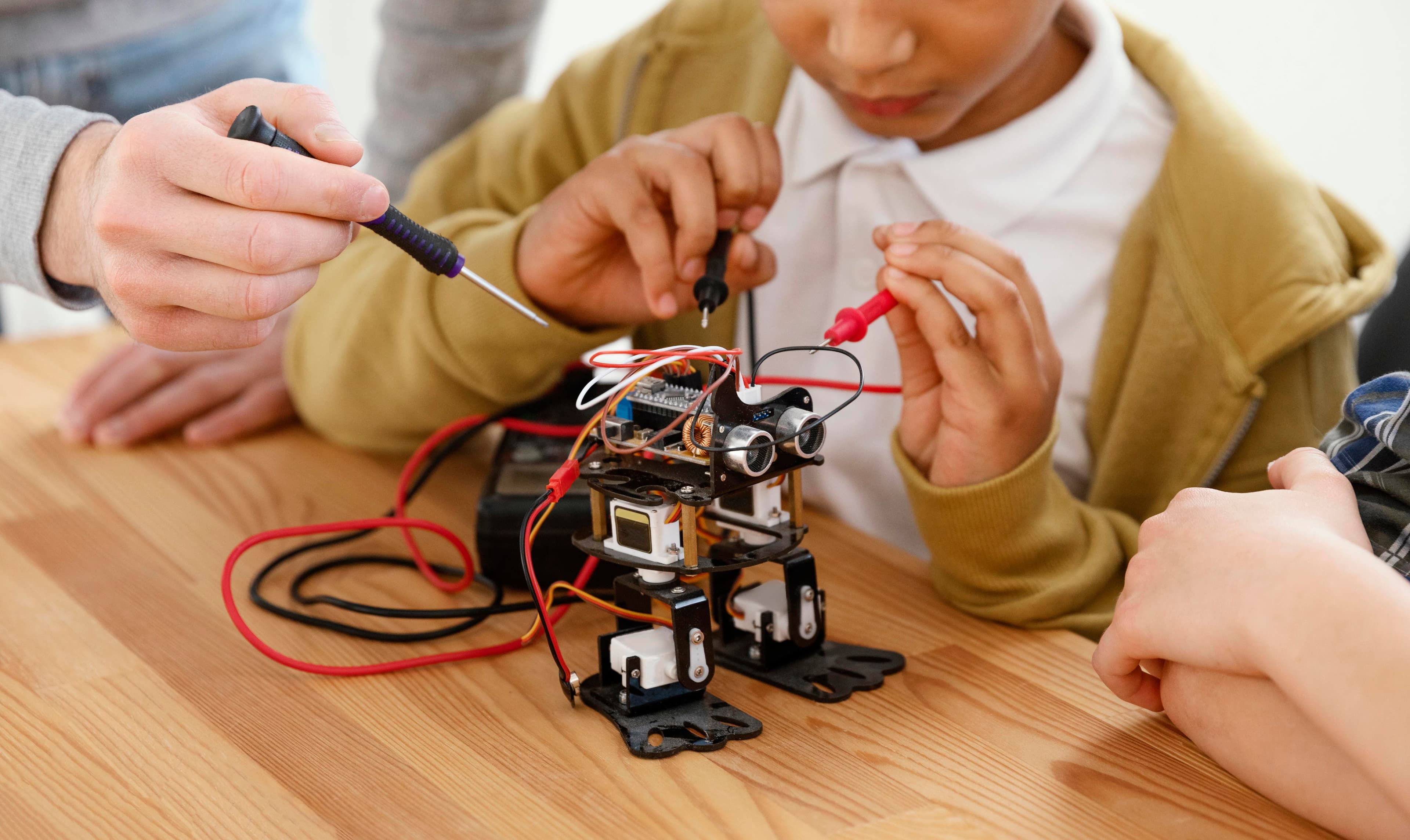
Not every school or learner is ready for a full STEM program on day one. A hands-on STEM or robotics workshop is often the best first step. In a few hours, participants go from never having touched a microcontroller to building and programming a working project. For teachers, a workshop can be the confidence boost that turns a cupboard of unused kits into a thriving STEM club.
Ideotronix is based in Greater Accra and runs practical sessions with schools and institutions. These have included a technical workshop with the Ghana Air Force Aviation College, sessions with Ho Technical University, and engagements with school leaders at the GNAPS 2026 National Conference. You can see moments from these in our gallery. This guide explains how workshops work and how to get the most from one.
Who are STEM workshops for?
- Students: primary, JHS and SHS learners getting a first, exciting taste of robotics, coding and electronics.
- Teachers: science, maths and ICT teachers who want practical skills to run STEM lessons and clubs.
- School leaders: heads and proprietors exploring what a STEM program could look like in their school.
- Tertiary and technical institutions: students and staff who need applied training in microcontrollers, sensors, automation and AI.
- Organisations and companies: community groups, NGOs and employers running youth or staff development programs.
Popular workshop topics
| Workshop | Ideal for | Participants leave able to |
|---|---|---|
| Intro to robotics with micro:bit | Ages 9 to 15, beginner teachers | Program sensors and build a moving robot car with block coding |
| Arduino training | SHS, tertiary, makers | Wire circuits, read sensors and control motors with Arduino code |
| Smart systems and IoT | JHS, SHS, technical institutions | Build smart home, farm or climate monitoring models with sensors |
| AI and computer vision | SHS and above | Use an AI camera to recognise objects, colours and faces in a project |
| Teacher training: running a STEM club | Teachers and STEM coordinators | Plan sessions, manage kits, assess projects and troubleshoot common problems |
| Competition preparation | School teams | Design, build and test a robot against competition-style challenges |
What happens during a hands-on workshop
- Short, visual introduction. What we are building today and why it matters in the real world.
- Guided build. Participants work in small groups, wiring components and assembling hardware step by step.
- Coding. Each group programs its project, starting from a template and then customising it.
- Challenge. A time-boxed challenge, such as making the robot avoid obstacles or the alarm respond to light, encourages problem-solving.
- Debugging and demo. Groups fix what does not work, then demonstrate and explain their projects.
- Next steps. Resources, courses and kits so learning continues afterwards.
Why teacher training workshops matter most
STEM training for schools in Ghana, and robotics training for teachers in particular, is often the missing link. Many schools in Ghana already own some STEM equipment that rarely gets used, because teachers have not had the chance to practise with it. Practical STEM training for teachers is the highest-impact investment a school can make. A trained teacher can reach hundreds of students over the following years, run clubs, prepare competition teams and adapt projects to the school's syllabus.
If you are building a lab at the same time, read our guide on setting up a STEM lab in your school.
Planning a workshop at your school or institution
- Group size: plan for small groups of two to four per kit. Larger cohorts can be split into rotating sessions.
- Venue: a classroom or hall with tables, power sockets and, ideally, a projector.
- Computers: laptops for coding. Many beginner tools run in a web browser.
- Duration: half-day for an introduction, full-day for a complete project, multi-day for teacher training or competition prep.
- Outcome: agree in advance what participants should be able to do by the end.
Workshops in Accra and across Ghana
We run STEM training in Accra and travel to schools and institutions in other regions, as our work with Ho Technical University in the Volta Region shows. Workshops can be delivered on your premises, so there is no need to move large groups of students.
Frequently asked questions
How long is a typical robotics workshop?
Introductory robotics workshops usually last half a day to a full day. Teacher training and competition preparation are often run over several days.
Do participants need laptops for a STEM workshop?
Laptops are needed for the coding part of most workshops. Many beginner tools run in a web browser, so modest laptops are fine. Groups can share one laptop between two to four participants.
Can you run a workshop outside Accra?
Yes. Ideotronix is based in Greater Accra but runs workshops for schools and institutions in other regions too. Contact us with your location and group details.
Is there training for teachers who have never taught robotics?
Yes. Teacher training workshops start from the basics and focus on the practical skills teachers need to run STEM lessons and clubs confidently.