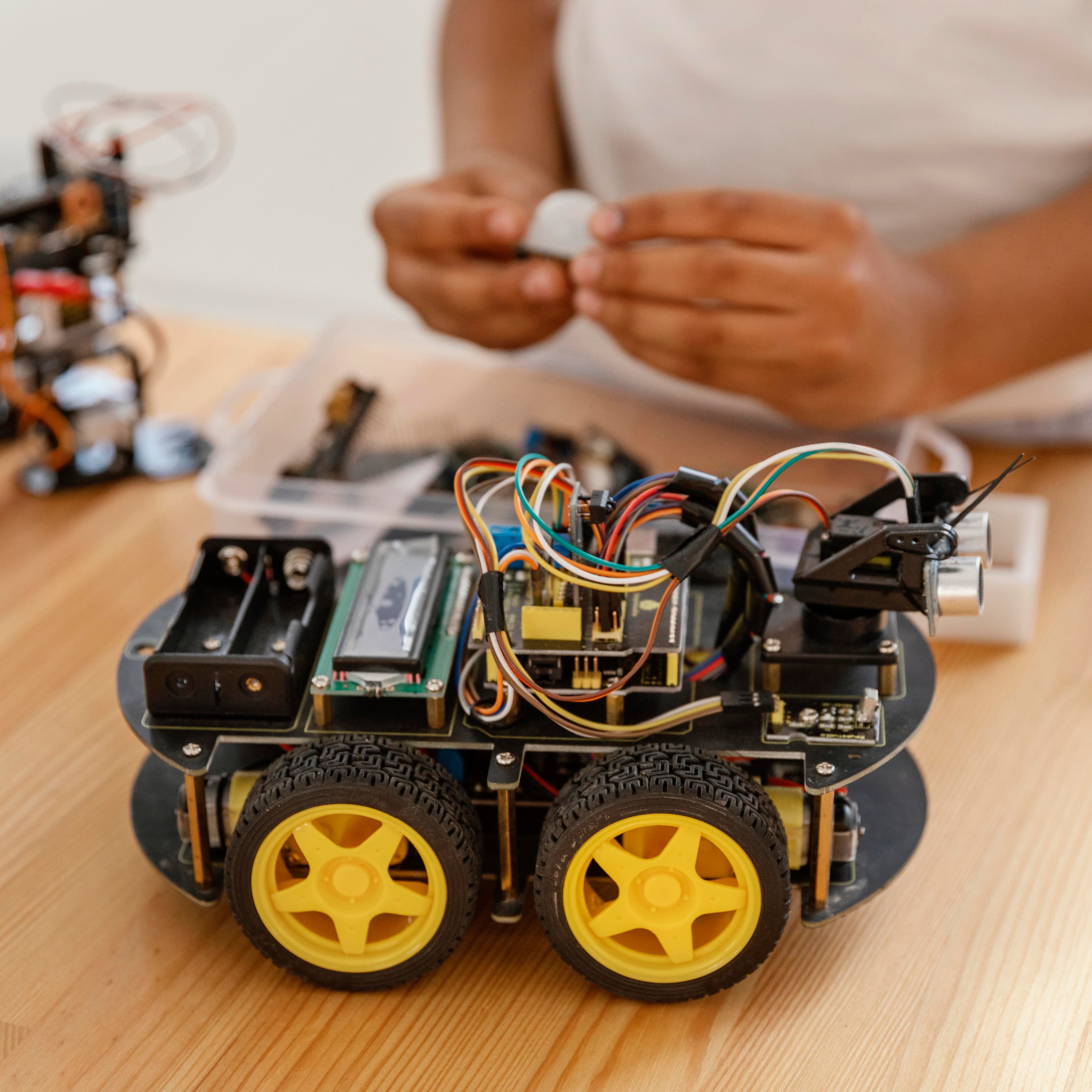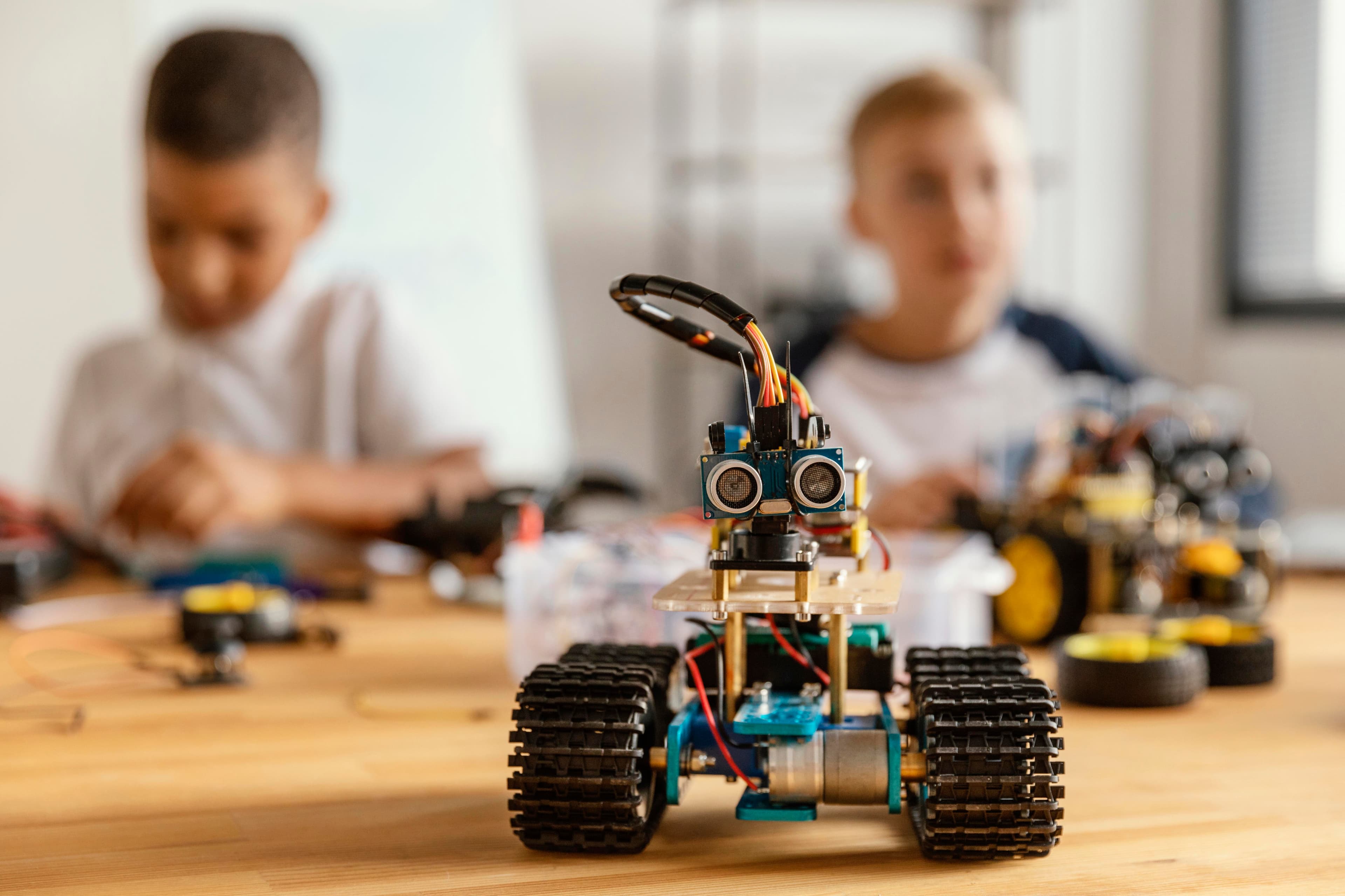


STEM stands for Science, Technology, Engineering and Mathematics. For years, many Ghanaian students met these subjects mainly through textbooks, notes and exams. That is changing. Schools, parents and the government increasingly agree that young people need to apply science and maths, not just recall it. They need to build circuits, program machines, test ideas and solve real problems.
This guide explains what STEM education in Ghana looks like today, why practical learning matters, and the concrete steps a school or parent can take to start a strong STEM program.
Why STEM education matters for Ghana
Ghana's economy is becoming more digital every year. Mobile money, agritech, fintech, renewable energy, telecoms and manufacturing all need people who can think like engineers. Many of tomorrow's jobs, and the businesses that will create them, will rely on skills like coding, data, electronics, automation and design.
- Problem-solving: STEM teaches students to break big problems into small, testable steps.
- Creativity: building a robot or a sensor project is a creative act, not just a technical one.
- Confidence: a child who makes an LED blink or a robot move discovers that technology is something they can create, not just consume.
- Local solutions: students who understand technology can design answers to local challenges, such as smart irrigation for farms, power-outage alerts and waste-sorting systems.
Ghana's own education reforms point the same way. The standards-based curriculum puts more weight on creativity, critical thinking and practical skills. The newer Senior High School curriculum adds technology-focused subjects such as computing, robotics and engineering. The government has also invested in dedicated STEM senior high schools. Schools that build practical STEM capacity now will be ready as these expectations grow.
The gap: theory without practice
The biggest challenge in STEM education in Ghana is not a lack of talent. It is a lack of hands-on experience. Many students can define Ohm's law but have never held a resistor. Many can write an algorithm on paper but have never watched code control something physical.
Common reasons include limited lab equipment, teachers who have not been trained to run practical sessions, large class sizes, and timetables built around examinations. Each of these can be solved, and none of them requires a school to build an expensive laboratory on day one.
What a good STEM program looks like
Whether you run a primary school in Accra or a senior high school in the Volta Region, strong STEM programs share the same building blocks:
- A structured curriculum: a clear pathway from simple circuits and block coding in the early years to microcontrollers, sensors, robotics and AI in the upper years. Learners should build on what they already know instead of repeating random one-off activities.
- The right hardware: age-appropriate STEM kits, such as micro:bit and Arduino-compatible boards, sensors, motors and robot chassis, in sufficient quantities for groups of two to four students.
- Trained teachers: a STEM program is only as strong as the teachers running it. Teachers need training, lesson plans and ongoing support, not just a box of equipment.
- Project-based assessment: students show learning by building and presenting projects, not only by sitting written tests.
- Showcases and competitions: exhibitions, science fairs and robotics competitions give students goals to work towards and let parents see the results.
STEM learning by age group
| Level | Focus | Example activities |
|---|---|---|
| Lower primary (KG to P3) | Curiosity, patterns, cause and effect | Simple circuits with conductive materials, unplugged coding games, building challenges |
| Upper primary (P4 to P6) | Block-based coding, basic electronics | Programming a micro:bit, LED and buzzer projects, a first line-following robot |
| Junior high (JHS 1 to 3) | Sensors, robotics, design thinking | Smart home and smart farm models, obstacle-avoiding robots, simple data logging |
| Senior high and beyond | Text-based coding, microcontrollers, AI | Arduino and Raspberry Pi Pico projects, Python, computer vision with AI camera modules, competition robots |
STEM training in Ghana: classes, courses, academies and school programs
When people search for STEM programs in Ghana, they usually find several different kinds of provider. Knowing the difference helps you choose:
- STEM classes and courses: regular STEM classes in Ghana, after school or at weekends, and online STEM courses that learners take at their own pace. Ideotronix offers self-paced robotics and coding courses with hands-on projects.
- STEM academies and clubs: a STEM academy in Ghana usually runs a structured program over a term or year, often preparing students for exhibitions and competitions.
- School STEM programs: a school STEM program in Ghana is delivered inside the school, with a STEM curriculum for schools, classroom kits and trained teachers. This is STEM education for schools at scale.
- Workshops and holiday camps: short, intensive workshops and holiday camps.
Ideotronix is a STEM company in Ghana that works across all of these: we provide hands-on STEM education through kits, courses, school programs, teacher training and STEM lab setup. Engineering education in Ghana starts long before university, and practical STEM is where it begins.
How schools can start a STEM program
You do not need to transform the whole school at once. The most successful schools start small, prove the value, then scale.
- Pick a starting group. For example, one year group or a STEM club that meets twice a week.
- Set clear goals. For example: by the end of term, every student in the club will have built and programmed a working robot.
- Equip one space. A single classroom with storage, power sockets and a set of shared kits is enough to begin. Our STEM lab setup guide walks through this step by step.
- Train your teachers. Choose two or three enthusiastic teachers and give them practical training before the program starts.
- Showcase the results. An end-of-term exhibition for parents builds support for expanding the program.
Ideotronix works with schools on exactly this journey: curriculum, classroom kits, teacher training, STEM lab setup and ongoing support. Learn more about our STEM programs for schools.
How parents can support STEM at home
- Start with a beginner kit. A good STEM kit for kids with guided projects is the easiest way to build hands-on skills at home.
- Learn together. You do not need to be an engineer. Build the first project side by side and let your child lead the second.
- Use online courses. Self-paced robotics and coding courses give structure and certificates of completion.
- Look for holiday programs. STEM holiday camps keep children learning during school breaks.
- Celebrate failure. In engineering, a project that does not work the first time is normal. Help your child debug instead of giving up.
Choosing a STEM education provider in Ghana
If you are comparing STEM education companies, a STEM provider in Ghana or a STEM training provider, ask these questions:
- Do they provide a structured curriculum, or only one-off sessions?
- Is the hardware age-appropriate, durable and supported with local spare parts?
- Do they train your own teachers, so the program continues without them?
- Can students keep learning through online courses and projects after the session?
- Can they show evidence of past work with schools and institutions?
Frequently asked questions
What is STEM education?
STEM education teaches Science, Technology, Engineering and Mathematics in an integrated, hands-on way. Students apply these subjects to build and test real projects such as circuits, robots and programs, instead of learning them only in theory.
Is STEM part of the curriculum in Ghana?
Yes. Science, mathematics and computing are core parts of Ghana's curriculum. Recent reforms place more emphasis on practical skills and creativity, and the newer Senior High School curriculum adds technology-focused subjects such as robotics and engineering.
At what age should children start STEM learning?
Children can start STEM activities as early as kindergarten through play-based building and simple circuits. Block-based coding and robotics usually work well from upper primary (about age 8 to 9). Text-based coding and microcontrollers suit junior and senior high students.
Does my school need an expensive lab to teach STEM?
No. Many schools start with one classroom, a set of shared kits and trained teachers. Equipment can be added gradually as the program grows.