
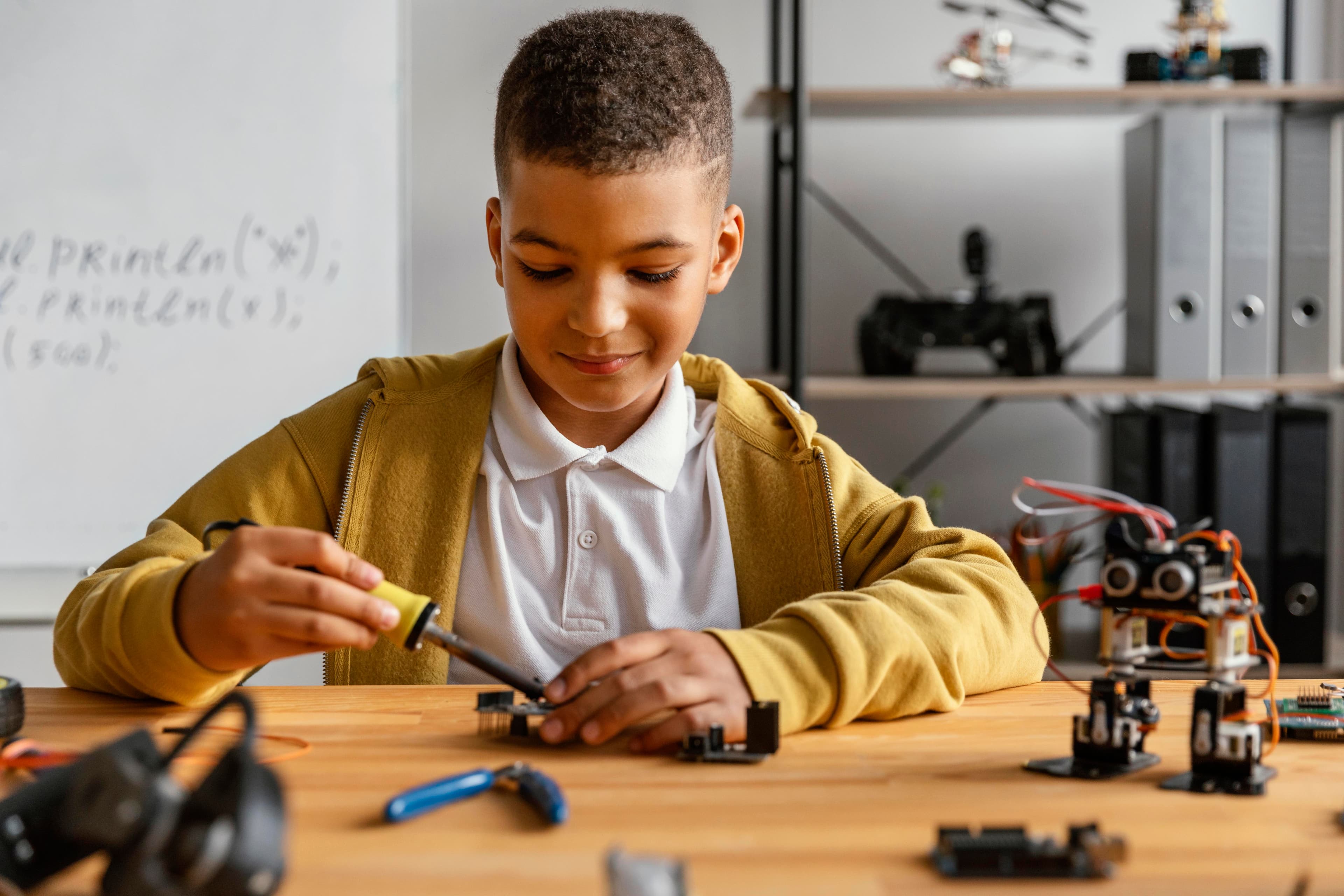
Ask parents what they want from a school today and you will hear the same words again and again: computers, coding, robotics, AI. They know the jobs their children will do are being reshaped by technology. Private schools that offer practical STEM stand out at admission time. The ones that do not risk falling behind.
Yet most private school owners face the same three obstacles: they cannot find or afford specialist STEM teachers, they do not have budget for a lab full of equipment, and their staff are already stretched. This guide shows how a partner-run STEM programme removes all three.
Why private schools are adding STEM now
- Admissions: a visible robotics and coding programme is one of the strongest reasons parents choose one school over another.
- Learning outcomes: hands-on projects make science and maths concrete, which helps pupils understand and remember them.
- Future skills: problem solving, teamwork, programming and design thinking prepare pupils for secondary school, university and work.
- Visibility: competition entries, exhibitions and project showcases put the school's name in front of the community.
Three ways to start a STEM programme
| Approach | What it involves | Main challenge |
|---|---|---|
| Do it yourself | Buy kits, train existing teachers, write your own lesson plans | Takes time, needs a committed teacher, and kits wear out |
| After-school club | A weekly club run by a teacher or volunteer | Reaches only a few pupils, depends on one person |
| Partner-run programme | A STEM provider supplies instructors, curriculum, kits and support | Choosing a partner you trust |
Any of these is better than nothing. Schools that want to set up their own lab will find our step-by-step STEM lab setup guide useful. For most private schools, though, a partner-run programme is the fastest way to reach every pupil without adding work for staff.
How the Ideotronix school programme works
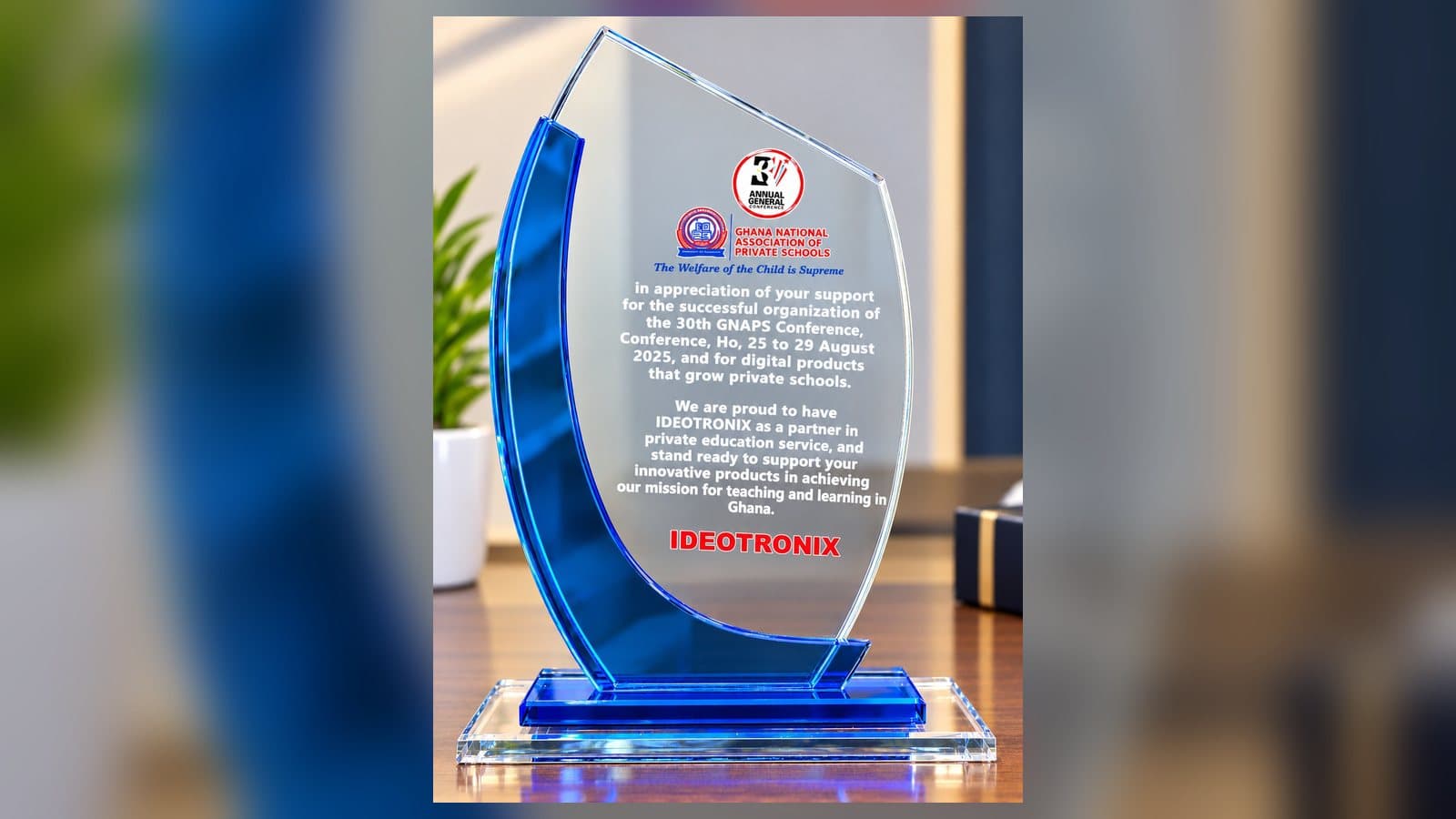
Ideotronix runs a complete STEM programme inside partner schools, the same model we presented to school owners at the 30th GNAPS Annual General Conference.
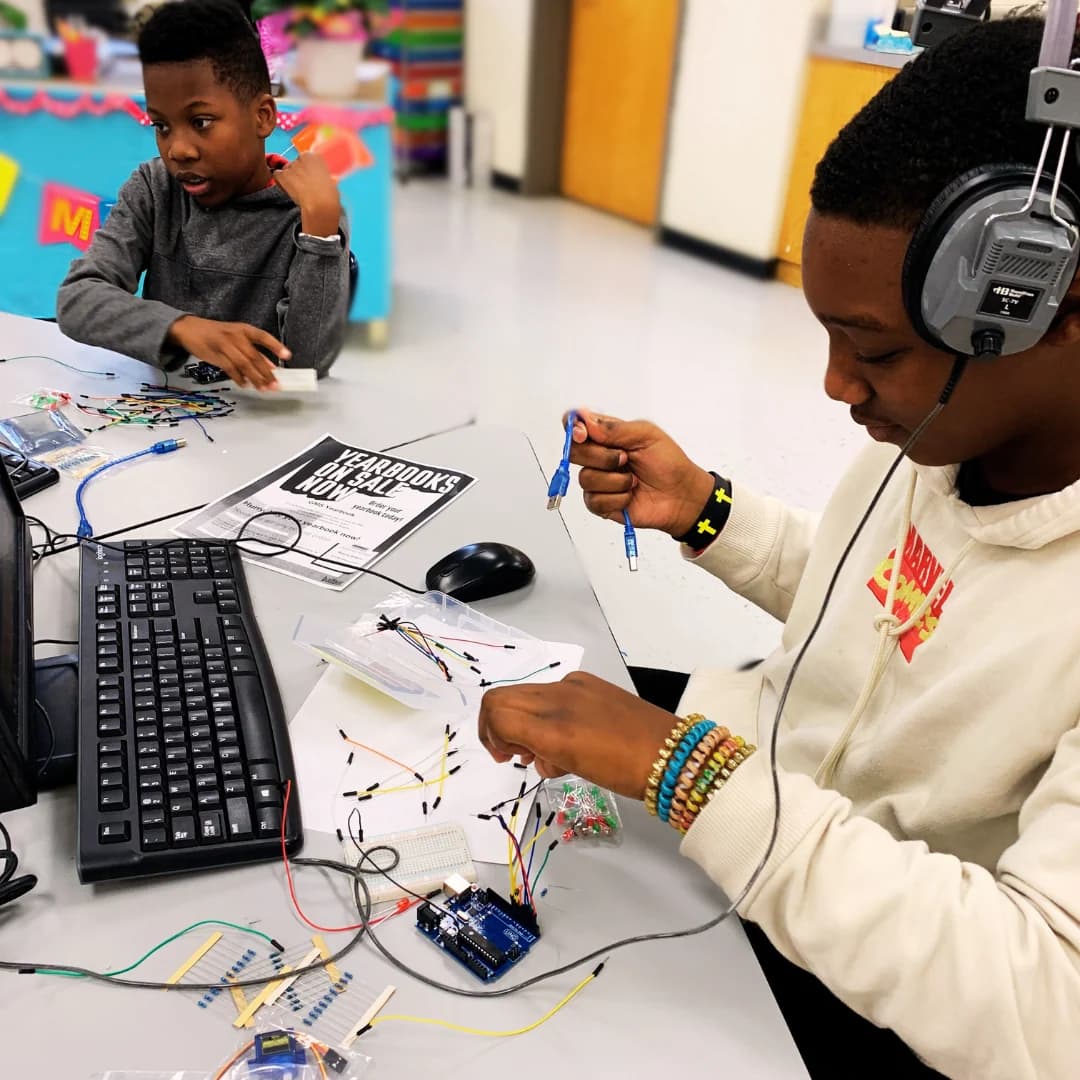
- Weekly hands-on classes in robotics, coding, IoT, electronics and AI for pupils from Primary 2 to JHS 2, built into the school timetable.
- Trained instructors on our payroll who work with your school, so you do not hire anyone or write a curriculum.
- All kits, tools and materials supplied, maintained and replaced by Ideotronix.
- A free professional school website to showcase your programmes, activities and admissions.
- A free AI school management platform: Mobile Money fee collection straight to the school's bank, SMS reminders to parents, attendance, HR, accounting, payroll and terminal reports.
- An AI teaching assistant that helps your teachers prepare lesson notes, quizzes and exam questions in minutes.
- Competition preparation so pupils can represent the school in STEM and robotics competitions.
What pupils learn, stage by stage
| Stage | Focus | Example projects |
|---|---|---|
| Lower primary (Primary 2 to 3) | Logic, sequencing, simple circuits | Light up an LED, program a robot to follow a path |
| Upper primary (Primary 4 to 6) | Block coding, sensors, robot cars | Line-following robot, smart night light, digital dice |
| JHS 1 to 2 | Text coding, IoT, AI basics | Smart farm monitor, obstacle-avoiding robot, face or colour recognition |
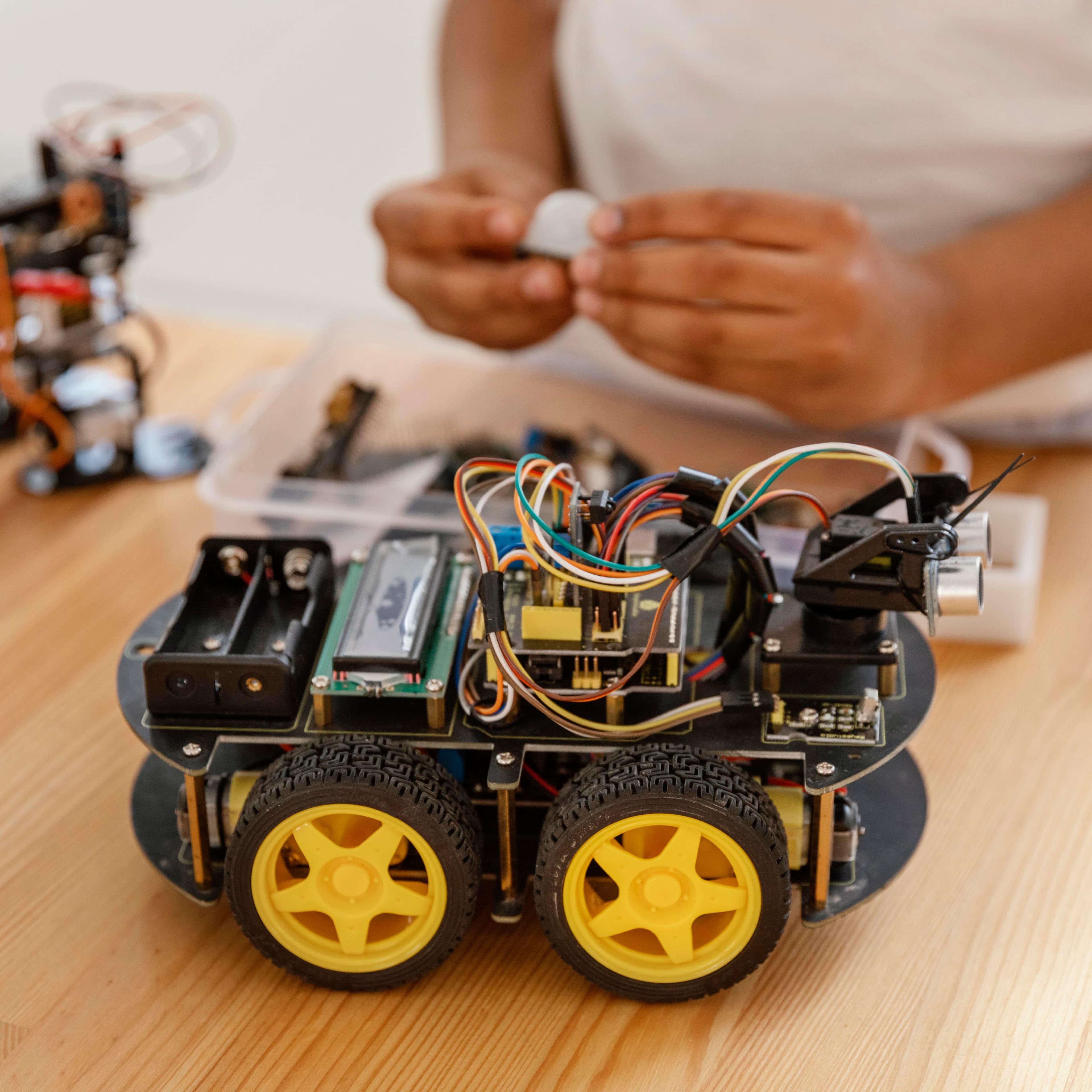
Pupils work with classroom kits such as the micro:bit TPBot car, the Smart Agriculture kit and the Smart AI Lens kit. For more ideas, see our STEM project ideas for students.
How to introduce the programme to parents
- Hold a demo day. Let pupils show parents the robots and projects they built in the first weeks.
- Send project photos home. Parents value seeing what their child made far more than a report line.
- Explain the skills, not just the gadgets. Problem solving, teamwork and confidence are what parents care about most.
- Share results. Competition entries, exhibitions and termly showcases keep momentum going.
Questions to ask any STEM partner
- Who teaches the classes, and how are instructors trained?
- Who owns, maintains and replaces the kits?
- Is the curriculum age-appropriate and project-based?
- How will pupils' progress be reported to the school and parents?
- Can the school try the programme for a term without a long contract?
Frequently asked questions
How can a private school start a STEM programme in Ghana?
A school can train its own teachers and buy kits, start an after-school club, or partner with a STEM provider. A partner such as Ideotronix supplies instructors, curriculum, kits and support, so the school can reach every pupil without hiring.
Does the school need a STEM lab first?
No. Classes can run in an ordinary classroom with portable kits. A dedicated STEM lab is useful as the programme grows, but it is not needed to start.
Which classes does the Ideotronix programme cover?
The programme covers pupils from Primary 2 to JHS 2, with weekly hands-on classes in robotics, coding, IoT, electronics and artificial intelligence.
Who pays for the programme?
Parents pay a termly fee per pupil, so there is no cost to the school's budget. Contact Ideotronix for current rates for your school.