
Africa has the youngest population of any continent, and Ghana's schools are full of students who will enter a job market reshaped by AI, automation and digital services. Education technology has a central role to play, and investors have noticed.
Yet much of African EdTech has focused on the same thing: digital content on a screen. Videos, quizzes and learning apps matter, but they leave a gap. Practical skills like electronics, robotics and engineering can't be learned by watching. That gap is where we see the next opportunity.
The problem: STEM without the "doing"
- Many schools teach science and ICT largely in theory, with little equipment.
- Where equipment exists, teachers are often not trained to use it, so it goes unused.
- Schools have little budget or time to design practical curricula themselves.
- Parents increasingly want their children to learn coding, robotics and AI, and they choose schools that offer it.
The model: hardware + curriculum + software
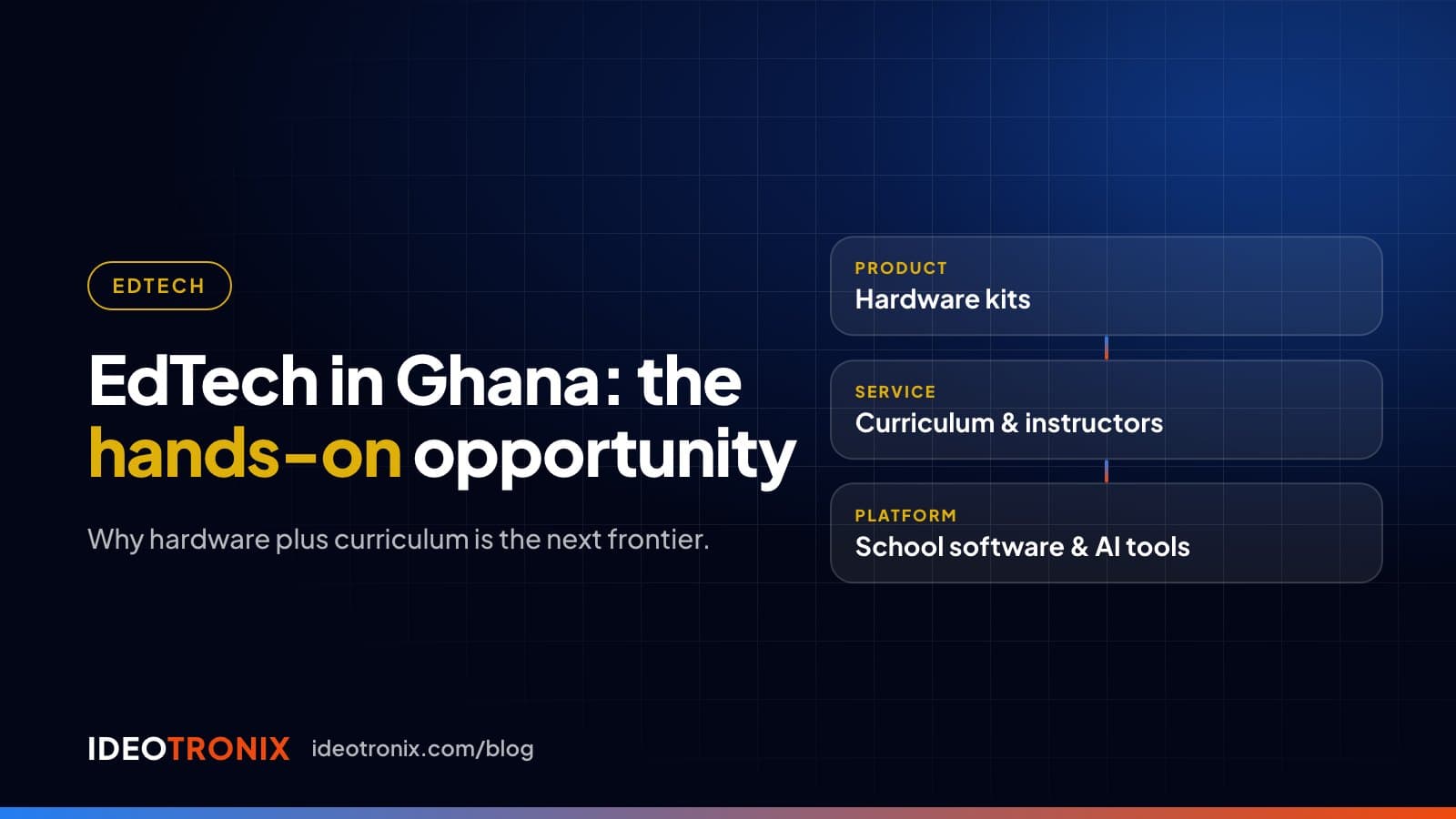
Solving the problem takes more than one product. The model that works combines three layers, and each one strengthens the others:
| Layer | What it is | Why it matters |
|---|---|---|
| Hardware | Robotics, electronics and IoT kits, school STEM labs | Makes learning practical; a tangible product schools and parents can see |
| Curriculum and instruction | A structured pathway, trained instructors, teacher enablement | Makes sure the hardware is actually used and learning is sequenced |
| Platform and software | School websites, management software, AI teaching assistants | Embeds the provider in daily school operations and adds recurring value |
Hardware alone becomes the "locked cupboard" we describe in why school STEM programmes fail. Curriculum alone becomes chalkboard STEM. Together, with software that makes schools run better, they create a sticky, defensible relationship with each school.
How the model earns revenue
- Programme fees: termly per-student fees for weekly STEM classes, often paid by parents rather than school budgets.
- Hardware sales: kits for schools, students, hobbyists and makers, through a direct shop and distributors.
- Courses: online and blended courses that extend learning beyond the classroom.
- Distribution: distributors and franchise partners who extend reach into new regions.
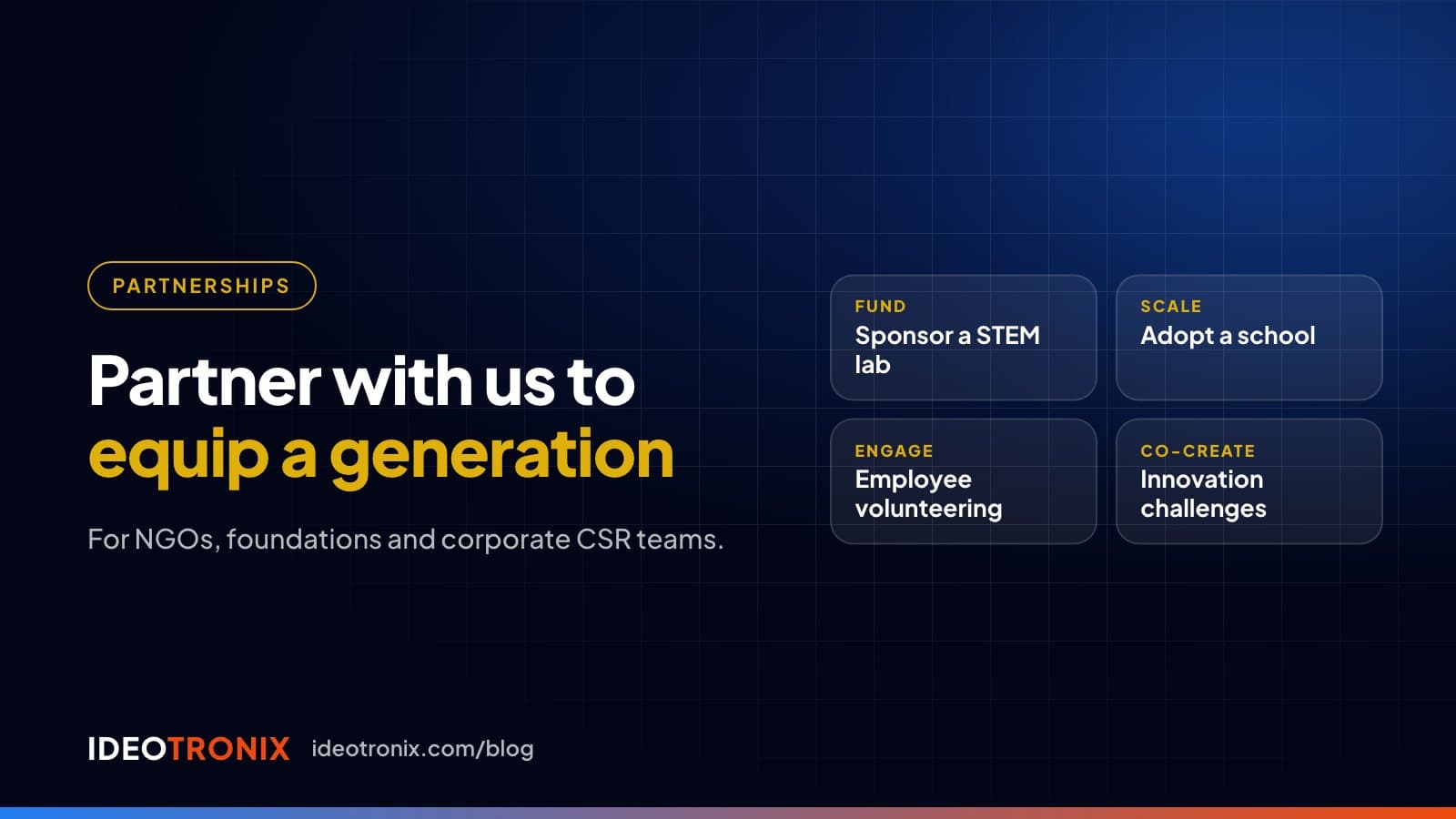
- Institutional partnerships: NGO, foundation and corporate-funded programmes.
This is the model Ideotronix operates: a school STEM programme, an online shop of kits, courses and a distributor network.
What investors should look for in a STEM EdTech company
- Proof of usage, not just sales: are kits being used every week? Look for lab usage and attendance data.
- Learning outcomes: can the company show students' skills improving? See how to measure STEM impact.
- School retention: do schools renew term after term?
- Unit economics: what does it cost to serve a school, and how quickly does it pay back?
- Distribution: can the model scale beyond the founding city through partners and distributors?
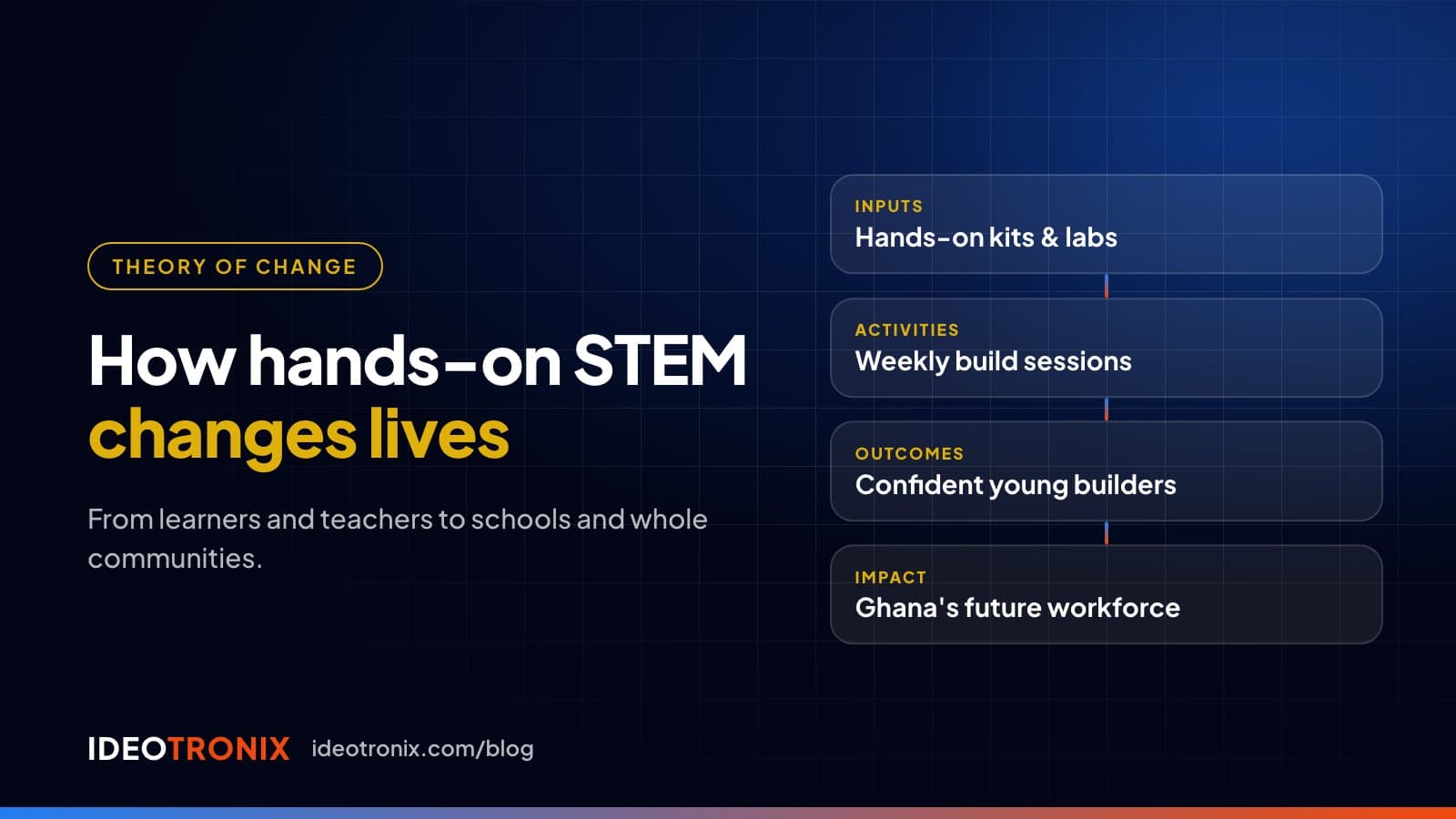
- A clear theory of change: does the team know how its work leads to impact? Ours is set out in the Ideotronix theory of change.
Risks to plan for
- Hardware logistics: importing, stocking and repairing kits takes working capital and good operations.
- Affordability: pricing must work for families, which is why per-term models and partnerships matter.
- Teacher turnover: trained teachers move on, so training must be continuous.
- Curriculum alignment: programmes must complement what schools already teach.
Frequently asked questions
Is EdTech in Ghana a good investment opportunity?
Ghana has a young population, growing parent demand for digital and STEM skills, and widespread mobile money for payments. Models that combine practical hardware, curriculum and school software address a gap that screen-only EdTech leaves open.
How do hands-on STEM companies make money?
Typical revenue streams include termly programme fees, hardware kit sales, online courses, distributor and franchise networks, and institution-funded programmes from NGOs, foundations and companies.
What should investors look for in a STEM EdTech company?
Evidence of weekly usage, measurable learning outcomes, school retention, healthy unit economics, a scalable distribution model and a clear theory of change.