

Almost every school leader wants a strong STEM programme. Many try: they buy a few robotics kits, invite a facilitator for a workshop, or start an after-school coding club. Too often, a few months later, the kits are back in their boxes and the excitement has gone.
This is not because students lack interest. It's because a STEM programme is a system, and when one piece is missing the whole system stops working. In our work with schools in Ghana we see four failure patterns again and again.
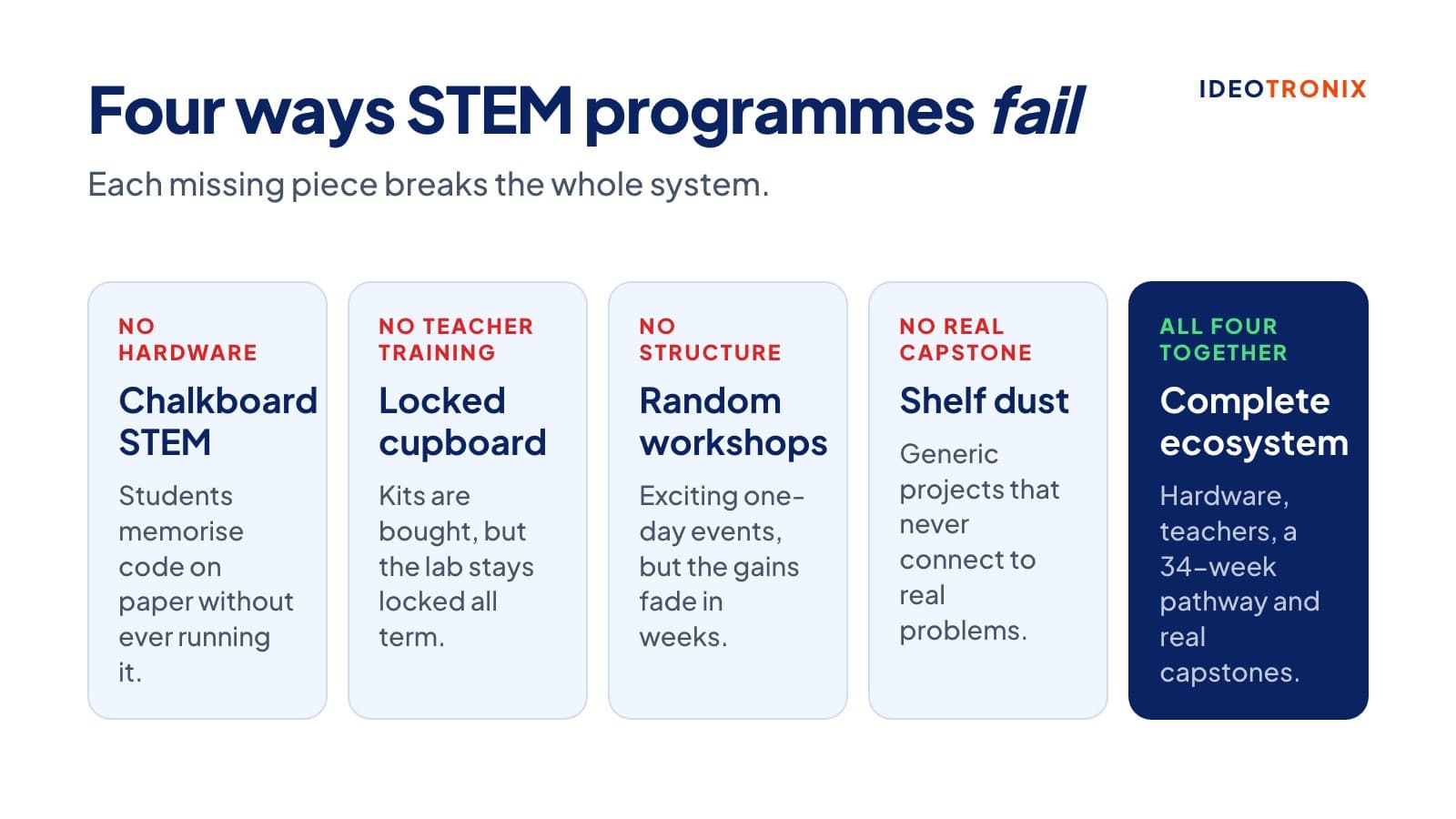
Failure 1: Chalkboard STEM (no hardware)
The school has excellent teachers and good textbooks, but no kits. Students copy code from the board into exercise books and never run it. They learn the vocabulary of technology without the experience of making it work, so the knowledge doesn't stick and the excitement never starts.
The fix: hands-on hardware for every group of students, from starter kits to robot cars and sensors. See our guide to setting up a school STEM lab.
Failure 2: The locked cupboard (no teacher training)
The school invests in expensive equipment, but teachers were never trained to use it. Afraid of breaking something or getting stuck in front of students, they keep the kits locked away. The lab is the best-equipped room in the school and the least used.
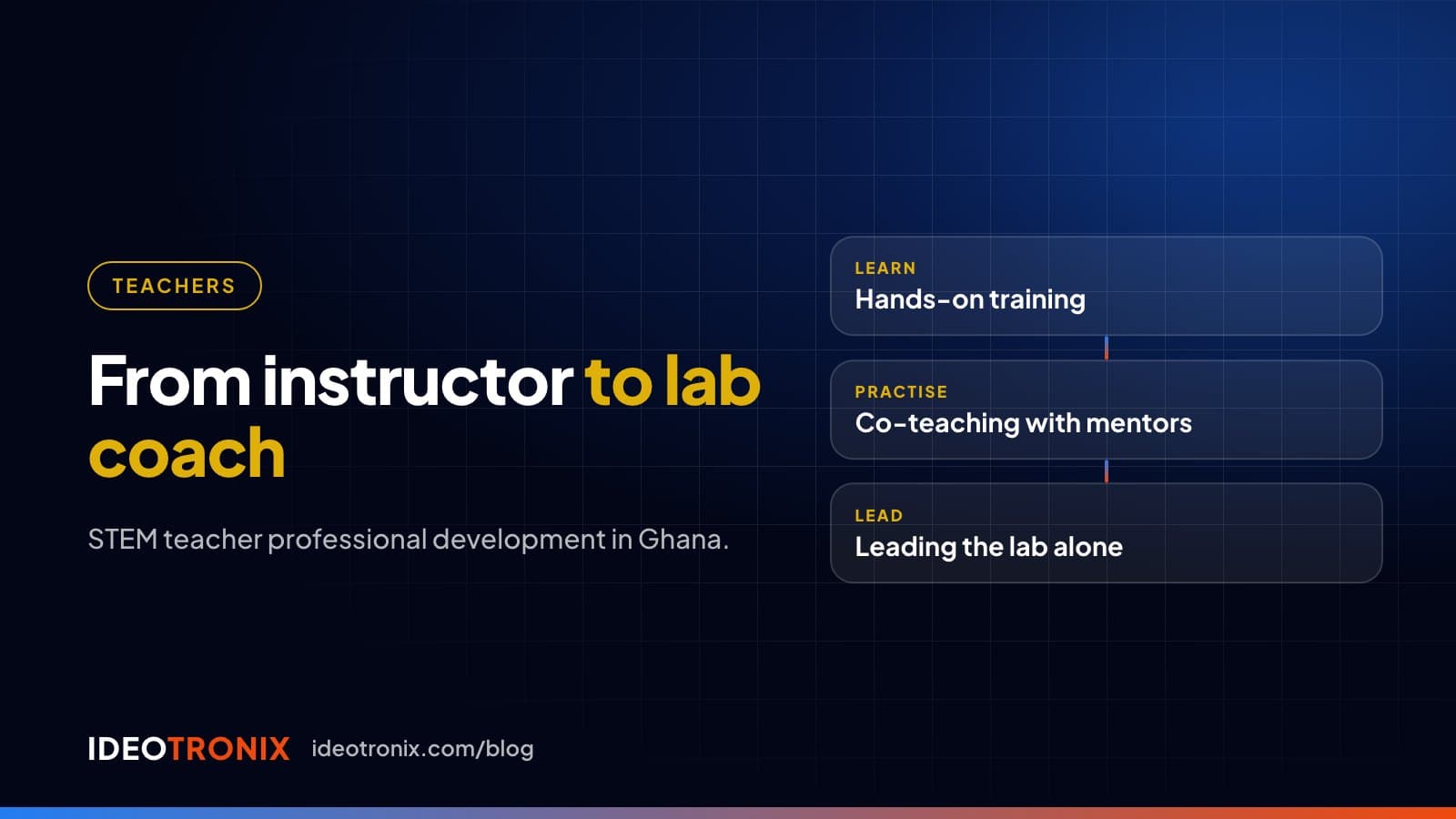
The fix: train and accompany teachers until they are confident leading sessions on their own. We explain how in from instructor to lab coach.
Failure 3: Random workshops (no structure)
The school runs exciting one-day events: a robotics workshop, a hackathon, a visit from an engineer. Students love them. But without a structured sequence of lessons and checkpoints in between, the skills fade within weeks, and every event starts from zero again.
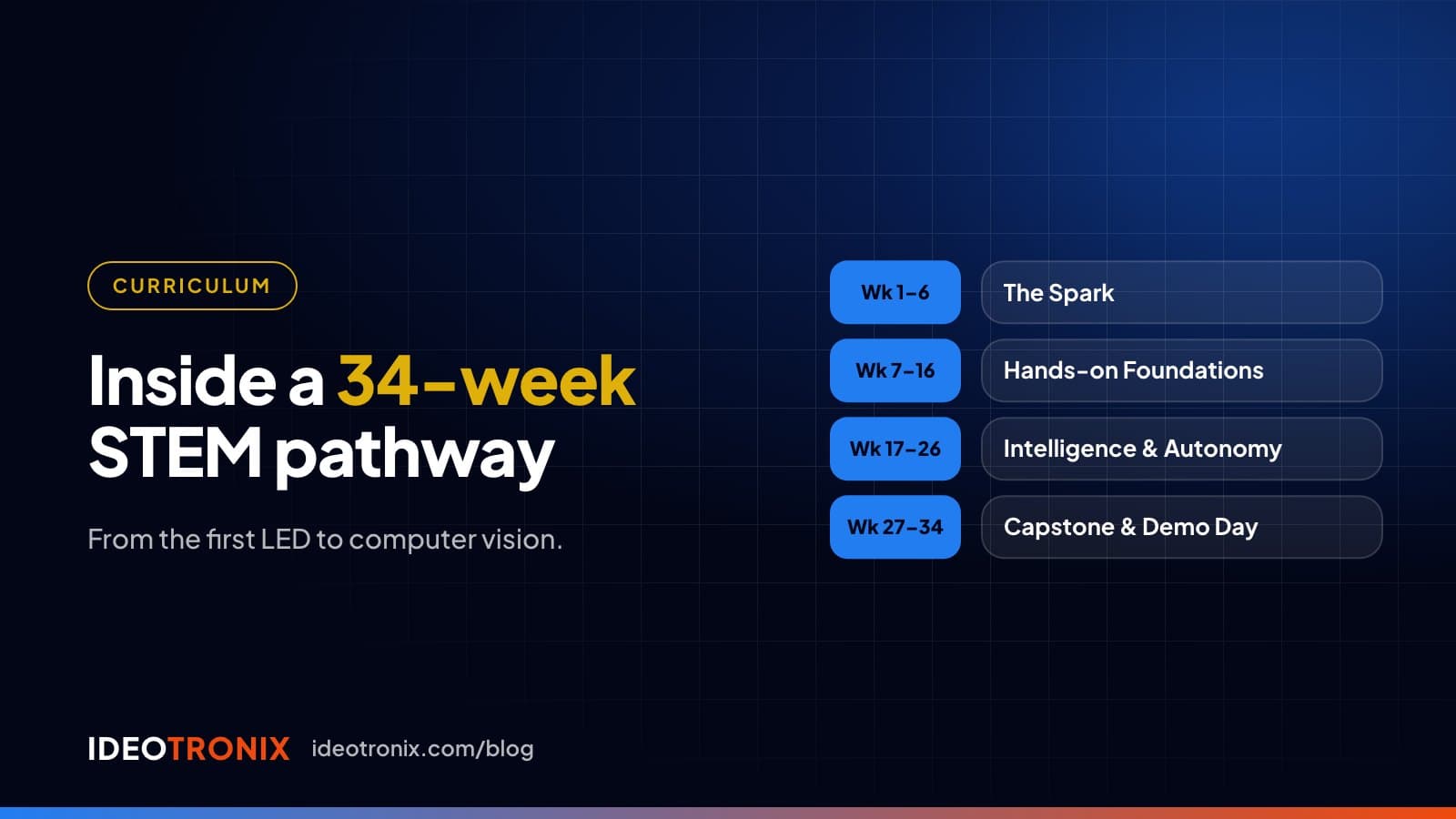
The fix: a structured pathway where each phase builds on the last and ends with a graded checkpoint. Our 34-week STEM curriculum is built exactly this way.
Failure 4: Shelf dust (no real capstone)
Students learn the theory and complete the labs, but their projects are generic toys that never connect to anything real. Once the project is marked, it gathers dust on a shelf. Students never experience the moment of using what they learned to solve a real problem.
The fix: capstone projects tied to real local challenges, such as farming, health, energy or safety, presented publicly at a demo day. For ideas, see how students build AgriTech solutions for Ghana.
The complete ecosystem
Programmes that last have all four pieces working together:
| Piece | What it provides | What happens without it |
|---|---|---|
| Hands-on hardware and labs | Something real to build and test | Chalkboard STEM |
| Teacher enablement and mentoring | Confident adults who keep the lab running | The locked cupboard |
| A structured pathway with checkpoints | Steady, visible progress | Random workshops |
| Real-world capstones and demo day | Purpose and public pride | Shelf dust |
How Ideotronix puts the four pieces together
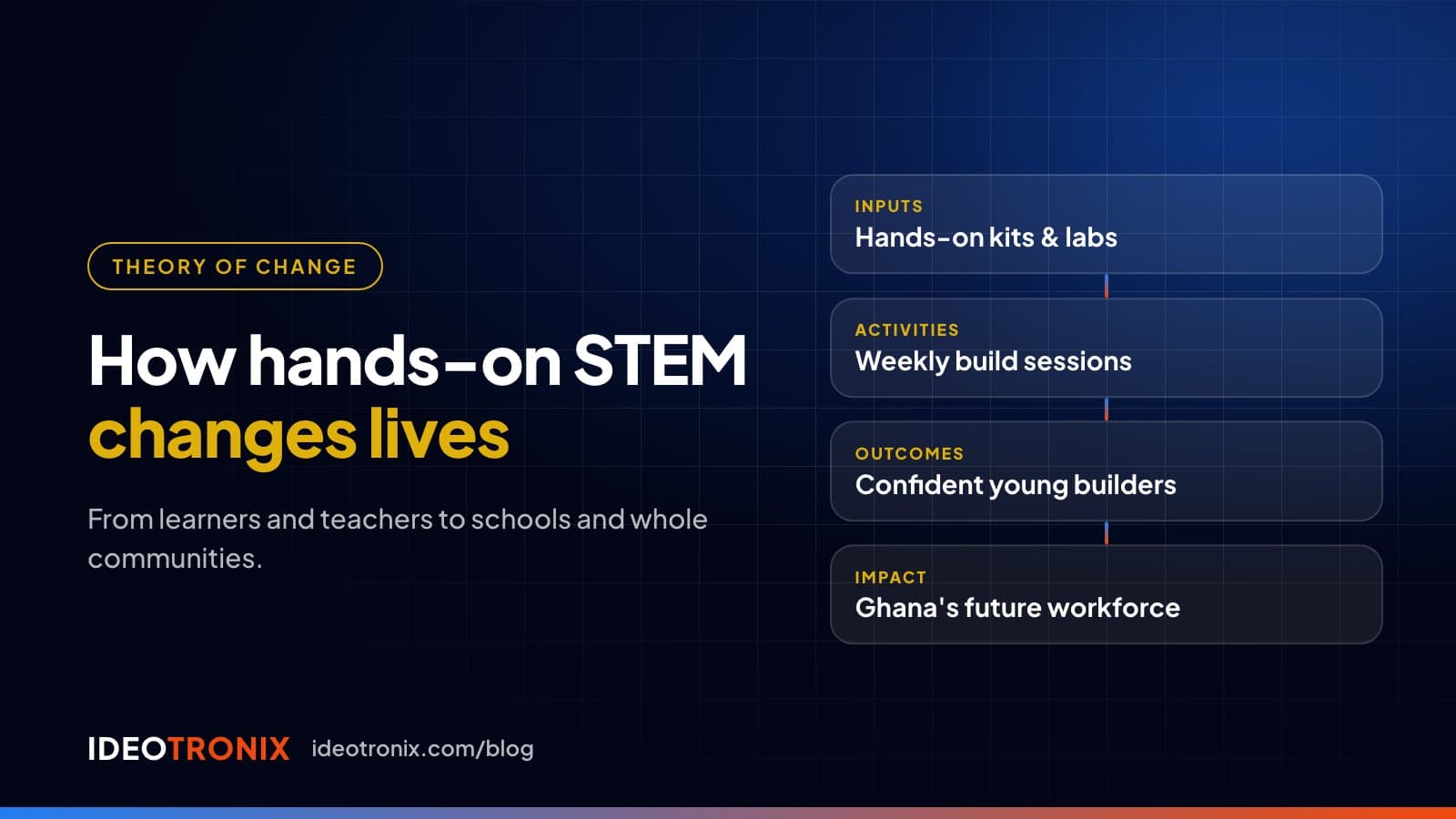
Our school partnership delivers all four at once: kits and labs supplied and maintained, trained instructors working alongside your teachers, a structured curriculum with checkpoints, and capstones presented at demo day. It is the practical form of our theory of change.
Frequently asked questions
Why do school STEM programmes fail?
Most fail because a key piece is missing: no hands-on hardware (chalkboard STEM), no teacher training (kits stay locked away), no structured pathway (one-off workshops whose gains fade), or no real-world capstone (projects that never connect to real problems).
What makes a STEM programme successful?
Successful programmes combine hands-on hardware, trained and supported teachers, a structured curriculum with checkpoints, and capstone projects that solve real problems and are presented publicly.
Are one-day robotics workshops worth it?
Workshops are great for sparking interest, but on their own the skills fade quickly. They work best as part of a structured, term-long programme.